


Catching Up with 2026 Poetry Prize Winner Brandel France de Bravo
September 22, 2026 | blog, news, Prizes, Uncategorized
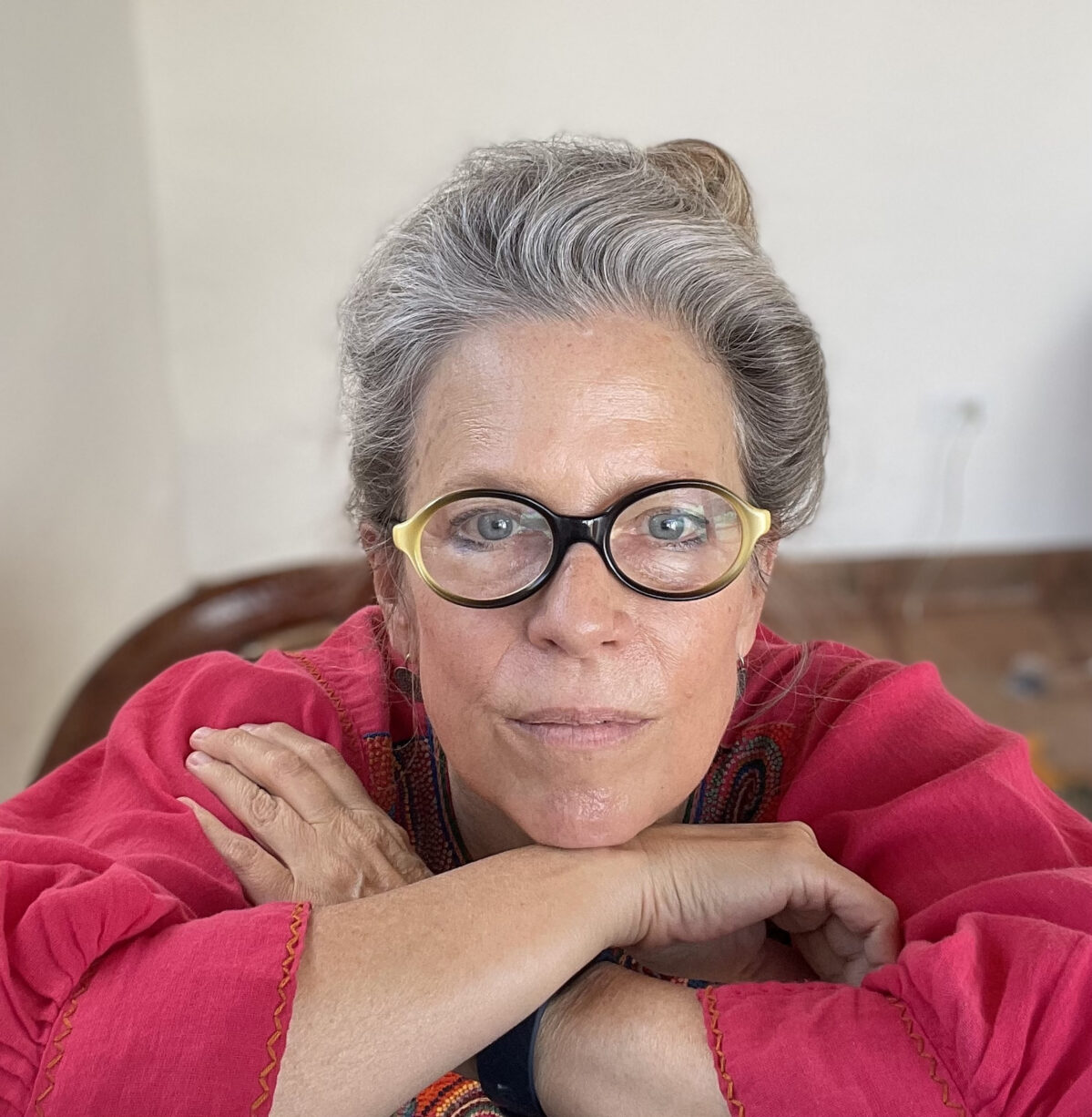
Brandel France de Bravo’s third book of poems, Locomotive Cathedral (2025), was selected in the Backwaters Press contest, an imprint of the University of Nebraska. Her poems have recently appeared in Best American Poetry, 32 Poems, The Cincinnati Review, Denver Quarterly, The Southern Review and elsewhere. She has received fellowships from the DC Commission for the Arts, the Hermitage Artist Retreat and the Virginia Center for the Creative Arts.
SP: Many poets shy away from writing abecedarians. What is it about this form that appeals to you?
France de Bravo: Abecedarians feel like poetry’s answer to rosary beads. There’s a prescribed progression, yet ample room for creativity. I’ve heard it said that if the subject matter is hot (death and grief, for instance), go cold. Formal constraints are one way of lowering the temperature. In memorializing someone close to you, it’s impossible not to also contemplate one’s own death. I appreciated having two guard rails for this poem: the alphabet and the two lines from Jenn’s poem that I chose as my golden shovel.
SP: How would you describe your writing process?
France de Bravo: I keep a pocket-sized journal in which I jot down quotes, overheard remarks, concepts (here’s one I like: “restoration drift”), dream fragments, and questions. More often than not, I’m writing toward a book with an organizing principle or overarching theme. This acts as a kind of lens through which I perceive my experiences and thoughts for a period of several years. Once I’ve carved out time to write, I begin by flipping through my journal. I look for a two or three seemingly unrelated entries and experiment with fusing them into a poem. The form or the structure of the poem can be predetermined (if I want to stretch myself or constrain myself by using an inherited form), or it may be informed by the content or tone.
SP: For “The Five Remembrances,” did you consider any other titles?
France de Bravo: No, I never considered another title! Buddhism’s “Five Remembrances” are a touchstone for my current manuscript “Fade Away & Radiate,” which is the title of a Blondie song. The Five Remembrances as listed below preface the collection, appearing right after the table of contents, and informing nearly all of the poems. They are:
1. I am of the nature to grow old. There is no way to escape old age.
2. I am of the nature to become ill. There is no way to escape ill health.
3. I am of the nature to die. There is no way to escape death.
4. All that is dear to me and everyone I love are of the nature to change. There is no way to escape being separated from them.
5. My actions are my only true belongings. I cannot escape the consequences of them. They are the ground on which I stand.
In my poem, I touch on each of the remembrances—they’re almost like milestones along the path. Because the poem is a golden shovel, it is itself a remembrance, a tribute to my friend, the poet Jennifer Martelli.
SP: You included an epigraph from Jennifer Martelli’s “Land Masses”:
about the last day the continents touched—and there was
a last day—or the last night a chunk of earth split off, became the moon
Why did these lines resonate with you?
France de Bravo: “Land Masses” was published in Incessant Pipe in February 2025, about eight months before Jenn died at age sixty-three. By the time the poem came out, we all knew of her late-stage cancer but we, her friends, were in denial because Jenn always said, “I feel good.” She had energy and was finishing up two new manuscripts. She was responding well to treatment… until all of sudden she didn’t. This is why her death felt shocking and precipitous even though her last day was really several days. The two lines from “Land Masses” that are embedded in my poem (the last word in each line of “The Five Remembrances” comprises the epigraph) evoke the finality of Jenn’s death, and the ache of missing her, but also the feeling that a part of me is missing. Reading that poem after her death, it felt as though Jenn was the chunk of earth that had split off and moved far, far away from me and the land mass of our MFA foursome, friends who’d never lost touch and supported one another’s work for over thirty years. Lastly, because Jenn’s poems are rife with references to the moon—gibbous, new, orange crescent—the fact that these two lines end with “moon” made them an obvious choice for my golden shovel.
SP: You write about erosion, seeds, volcanoes, but also Google, Payless, and cocaine. Why did you decide to blend natural imagery with modern fixtures?
France de Bravo: This is how I live, one foot planted in the soil, and the other on an escalator in a mall that is slowly dying. I’m definitely not what you’d call a nature poet, and a lot of the nature imagery in this poem stands-in for human struggles and afflictions. I love poems that contain multitudes, poems that speak to the large and minute wonders of nature, to its resilience and capacity to dwarf and even subsume the self, but that also make space for the fast-evolving peculiarities of daily life in the 21st century. Who doesn’t use Google images? Cocaine comes in because it’s something Jenn struggled with in her youth and wrote about extensively. Payless Shoes is the rendez-vous spot precisely because the brick and mortar stores no longer exist, have died. My poem, “The Five Remembrances,” takes on aging, sickness, the constancy of change, our actions as legacy, and death, which while lasting “isn’t last.” Death is a chapter in the never-ending book of transformation. It invariably brings new life, which is why “inheritance”—the passing of the torch—and a “fertilized ovum” appear toward the end. Jenn’s last chapbook was titled: All Things are Born to Change Their Shapes. I guess I also had that in mind.
SP: You chose to close on the image of a zygote. How do you hope readers receive this?
France de Bravo: A zygote is diploid because it’s a fusion of egg and sperm. I was hoping this image would echo the idea of a golden shovel—someone’s words fused with my own—while also heralding birth. I like to think that Jenn is out there somewhere, reborn as an aureoled moon, orbiting us or some other more deserving planet.
Submissions for the swamp pink Poetry Prize open on January 1st and will close January 31st.
Submit your work here.
With a $20 entry fee, writers may submit up to 1-3 poems. Winners receive $2,000 and publication. All entries will be considered for publication, and more than one story may be entered.
Before you submit, please remove your name and any other identifying information from your manuscript. Simultaneous submissions are okay, as long as you contact us should the work be accepted elsewhere.