


Catching up with 2026 Fiction Prize Winner Reese Lopez
October 27, 2026 | blog, Interviews, Prizes
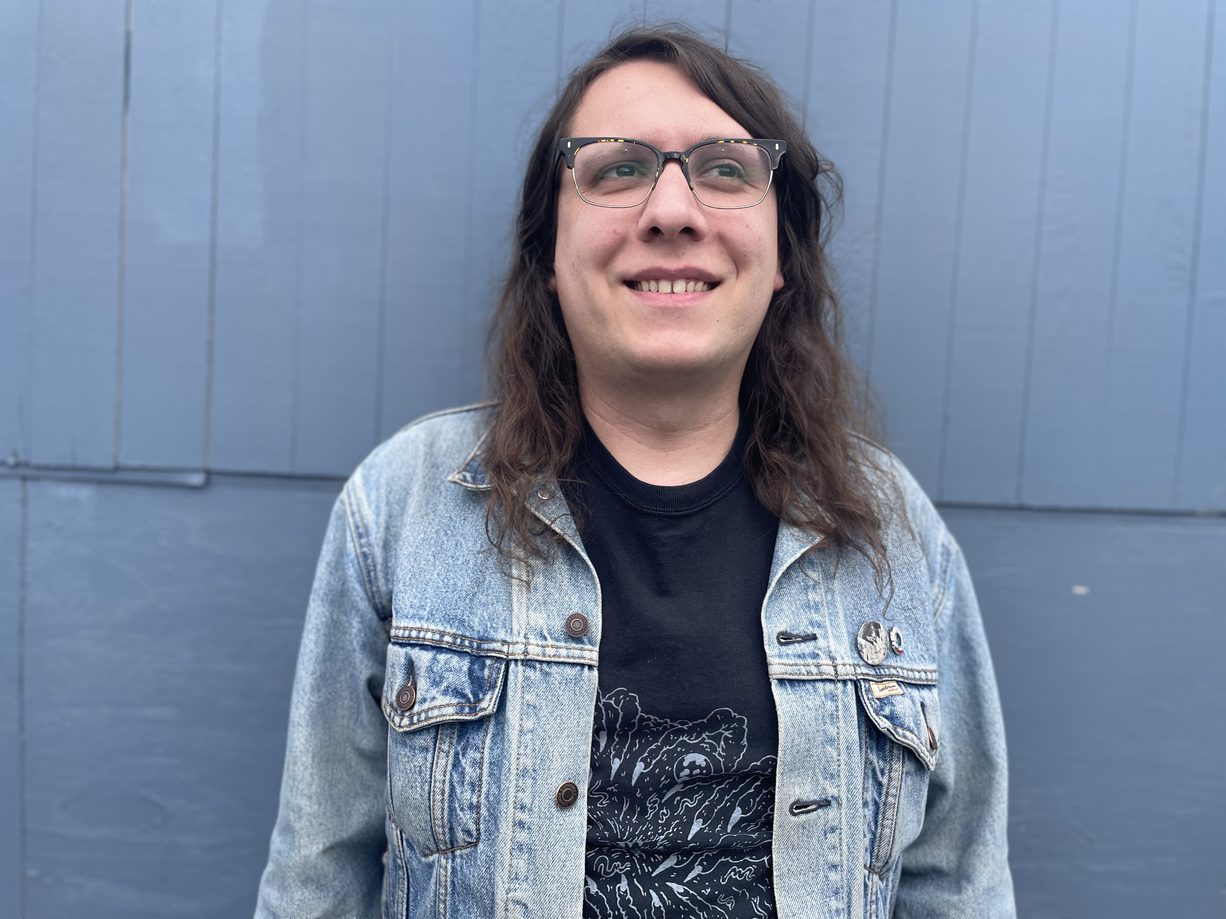
Reese Lopez holds an MFA in fiction from the University of Houston, where he was an Inprint C. Glenn Cambor Fellow and winner of the Donald Barthelme Prize in Fiction. He lives in Portland, Oregon, where he is at work on a novel. This is his first published story.
What informed the beginning of your writing process for this story?
An old friend of mine shared this story with me many years ago. I always knew I wanted to write about it, but it took the better part of a decade before I figured out how to put the material together. So many of the details felt significant, but I couldn’t make anything meaningful out of them, much like the narrator. I’m sure grappling with that over time changed how I eventually wrote the story. The narrator has also been trying to work out these ideas in her head for many years.
When I first started writing, I didn’t know why the narrator was telling this story or what exactly she was avoiding, but I quickly realized it revolved around the relationship with her mother. The earliest version of this story mentions the father before the mother, but later I changed the order to mention the mother first, because she’s more important.
Tell us why you chose the title “Satyricon” for both the father’s film and your short story?
Satyricon is the real title of the film, which was released in 1969. It’s also known as Fellini Satyricon, but using that title would exaggerate Fellini’s importance to the narrator. As far as she’s concerned, the film could belong to any famous European arthouse director. It’s more about confronting this artifact that feels intimidating and almost unknowable (which could also describe the estranged father). Satyricon is supposed to be so artistically and intellectually important, but the narrator isn’t sure she cares about that. The father has a small part in the film, so he’s not as important as the film itself or its famous director. But he still plays a small, indisputable role in Satyricon, just as he plays a small, indisputable role in the narrator’s life.
A simpler answer is that this piece is an excerpt from a novel (I hope to complete a draft soon), and its original placeholder title, “Fellini Dad,” felt too casual when I started sending it out to journals.
The interiority feels very true to life. How much is your writing pulled from your own experiences?
As I said, this story really belongs to an old friend of mine, who kindly allowed me to adapt it for my own purposes. Large parts of what this narrator recounts are similar to my friend’s experience, while other parts are similar to my own experience. Some aspects are embellished or fabricated, though not too much, and I still have my own concerns that dictate how the story is arranged and what it emphasizes. The narrator isn’t fully me or my old friend, but she combines some of our anxieties, including avoidance and (as you noted in the next question) obsessiveness.
The protagonist seems to be obsessed with embarrassment. Do you believe grief can be performative?
A friend of mine died recently—in fact, on the same day I learned I had won this prize. His death wasn’t totally unexpected, but it was still surprising and upsetting. He was a poet and a musician, and a lot of our friendship centered on music. After he died, I expected I would drink beers and listen to the music that made me think of him. Instead, I found all these other songs popping into my head, totally unexpected and inexplicable stuff, like a random song by The Clash, a band I hadn’t listened to since high school. Where did these songs come from? They had nothing to do with my friend or our friendship, but they took on a mysterious significance that day as I thought about him and his life. I did worry for a moment that I was grieving incorrectly—that I was listening to those songs selfishly and not being dutiful to the memory of my friend. Does this embarrassment imply there’s some correct way to grieve? I don’t think I believe that, but I was surprised by my sense of impropriety. My friend probably would have told me I was worrying too much.
How much do films influence your creative work?
You know it’s funny, when I first started writing this piece, I didn’t have much knowledge of cinema at all, outside of the more popular European arthouse movies the narrator dismisses. I’ve learned much more over the last few years, so maybe the narrator’s obsession with the movie prefigures my own. Film has helped me consider different approaches to narrative—how you can move a story associatively, using image or theme, rather than plot, or how you can use subtext to present ideas to the audience without describing them directly. Some directors I find influential include Eric Rohmer, Abbas Kiarostami, and Kelly Reichardt.
In a more conceptual sense, I often find when I’m writing that certain ideas or images keep coming up. I think this happens for lots of writers. It may be unintentional, but you start to feel substantial connections forming and you follow them. As I mentioned, this piece comes from a novel, and one thing that keeps coming up is the characters’ interactions with all these decaying forms of film: home movies, busted VHS tapes, old YouTube videos, low-budget documentaries. I’m still working out the connections, but I know some of this has to do with how the characters remember their lives, how they remember each other and what they’ve experienced.
What do you want readers to take away from the ending of this piece?
The next place we’re going could be even more beautiful than this one.
Submissions for the swamp pink Nonfiction Prize open on January 1st and will close January 31st.
Submit your work here.
With a $20 entry fee, writers may submit up to 25 pages of nonfiction. Winners receive $2,000 and publication. All entries will be considered for publication, and more than one story may be entered.
Before you submit, please remove your name and any other identifying information from your manuscript. Simultaneous submissions are okay, as long as you contact us should the work be accepted elsewhere.