



An Interview with Rae Dumont, author of In the Shadow of Silence
September 15, 2026 | blog, Interviews, news
TW: Mentions of suicide.
“Bestseller career is not on my wish list, but I wanted to write something that was profoundly true.” — Rae Dumont
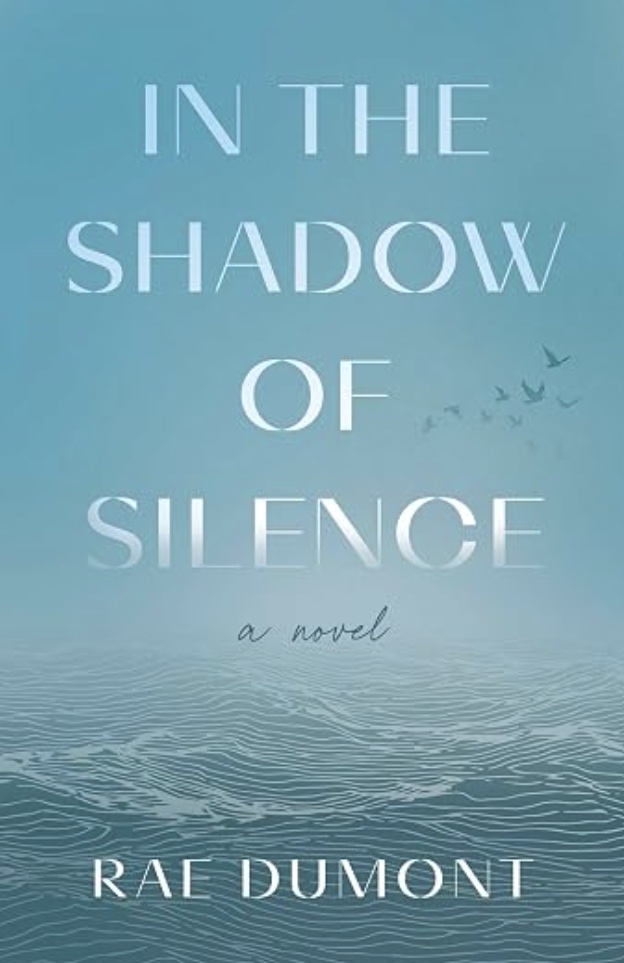
Over the summer, I (Ebony Sade, MFA ’27) got the chance to speak with Rae Dumont about her debut novel, In the Shadow of Silence. The novel traces the story of one family and their ability to cope with and understand mental illness. Ultimately, Dumont’s novel stands as a beacon of resilience that sheds light on the ways that chronic depression manifests in the individual and the people around them.
Ebony Sade: When did you decide you wanted to write a book, and is this the first idea that you had?
Rae Dumont: I’m a pediatrician. It’s what I have done for a living for decades. I worked in a major hospital and discovered that my medical skills were all nice and good. But, what I really needed was to connect with people. Not only that, I was working with kids and unstable type 1 diabetes. I wasn’t going to get a thing done unless I got their family on board. And it’s a difficult illness (diabetes). And if you’re a kid, you want some freedom and you want to live your childhood, right? Kids would be breaking rules all the time, like not wanting to eat on time, only wanting to eat good things, not exercising when planned, blah, blah, blah. That’s not what kids do. So, I discovered through that work that I had to find a way to meet people where they were and then meet the family where each of them were and then come up with a collaborative plan. That got me into career number two, which was family therapy. If you’re a family therapist and you’ve spent decades getting inside people’s lives and the difficult things they go through, writing about that as a profession, there’s a certain language you use. It’s not very passionate. They want numbers, statistics or case reviews. You’ve got to extract a teachable point. I had done that for a long time but I wanted to write something more from the heart.
I started writing short stories and a few of them were published. That was my first [writing experience], and I discovered I really enjoyed doing that. The thing I probably enjoyed the most is creating a character and then putting that character on paper and watching what they’re going to do. Oh my God, right? You just put them there; they become real, and they have a mind of their own, and they start doing things, and you don’t control all that. Ideally, I just really enjoyed exploring characters, but I found I needed a story arc of some sort. In my work, I saw a couple families where one parent committed suicide or had in the past. And I watched how families coped with that. You know, who does what? How does the other parent react? How do they care for and support the kids? Sometimes the kids support the other parent. Any number of possibilities. And it’s so moving to watch these different individuals each have their own reaction based on their stage of life or based on their position in the family.
Then, I watched a tragedy like that up close in my extended family. No warning. People just wondered what they could have done. And I began to hear that phenomenon from other people, people I knew or people in a writing group: Oh yeah, I have spent my whole life wondering why this friend in college committed suicide. And I’ve spent my whole life ashamed to tell people that my father killed himself. I always wondered what I might have done. When you witness something like that, you might be stunned for a while, but for me all of a sudden I had to write about it. I wanted to share what I had learned, not just about the events, but my whole career, right? My career is about people and how they manage pain, how they interact with each other, support each other, and hurt each other. Witnessing that event was like a tipping point for me. I just had to write, and as I wrote, two things emerged. One, I wanted compassion for the survivors, which was my initial viewpoint. But, in the course of writing, I had to also make the suffering person real on the page. Otherwise, it wouldn’t have been fair to someone suffering from depression to describe him as a villain. I had a message about mental health: Take it seriously, get treated, don’t hurt your family this way. The book evolved from that into a more complex story. I ended up with a novel that I hope can be, and so far has been, a comfort to people who’ve been depressed, to people whose partner has been depressed, to people who’ve lost somebody.
Ebony Sade: Prior to In the Shadow of Silence, were all your short stories about mental illness? What kind of genres do you tend to play in?
Rae Dumont: They were mostly fiction. However, one was nonfiction and it was the story of an aunt and uncle I admired. They had been in the resistance movement in Europe during a Nazi occupation, and they were amazing people. They’re the ones who taught me that justice is something you fight for.
All the [other stories] were fiction. There was one about a single mother who had gotten pregnant in Ethiopia while she was working in a refugee camp. Her son is bipolar. He self-medicates and becomes addicted as well. That story is about how to set loving limits to someone.
Ebony Sade: How long did it take you to write this book?
Rae Dumont: In the Shadow of Silence had a gestational period of nine months from the first word to the end of the first draft. That’s just how long it takes me to write a first draft. My second book had the same [period]. I did a bunch of edits and then I sent it out to others. I started writing in August 2022 and I sent it off to She Writes Press probably in late 2023. So, a year and a half, maybe two, of editing and revising. The process of editing is easily twice as long as the first draft.
Ebony Sade: How did the main character, Eva, come to be? Would you say, given her profession, she is a reflection of yourself?
Rae Dumont: In a very early version, which got scrapped, this book was 150 pages longer. A lot of that was almost autobiographical. I didn’t want to do that at all. I did not want to whine about my childhood, which was no great shakes. So, I invented Eva, but yeah, she looks like me. Most importantly, Eva thinks like I do.
Ebony Sade: What was the process like in creating Eva’s husband, Lyman? Did his character come before or after Eva?
Rae Dumont: Well, the point of view is entirely Eva’s, so Lyman kind of materialized as I wrote about him. Eva needed to fall in love if I was going to write this story, so we needed to understand what kind of person she was going to fall in love with. I already knew a person like Eva needed to find someone who was both reliable and an outdoors person. She finds Lyman, and then I find Lyman, and then Lyman trots onto the page. So, he was created during the process [of writing]. I needed to show a man who fit her family history, fit her passion for the outdoors, and who she could really fall in love with and make a life with. So, he grew as we went.
Ebony Sade: Very interesting! I had expected Lyman to appear first and that during the process of writing it may have been about adding or choosing characters that could respond to certain behaviors of somebody who’s suffering from suicidal depression. How did you decide what behaviors and traits to include? For instance, was there possibly a moment between Eva and Lyman which told you that he needed to say this or do that for the story to progress around the main theme?
Rae Dumont: I know something about what it’s like to be the spouse of someone who’s depressed, and I’d seen so many patients who had a parent who was depressed. My own husband was depressed. Having spent 30 years with someone who would shut down and shut down and shut down and become unavailable—That experience is part of the extent to which Eva and I are twins.
I knew when I started the arc of the story that I was going to write about a beloved husband and father who sinks into depression. That said, he [Lyman] gets depressed and I’m thinking, well, wait a minute. I’m a therapist, I need to successfully treat this. So, I invented a successful treatment. Man, that was fun! Then, they [the family] could have some good years before [the depression] comes back. That is how that story evolved.
Ebony Sade: Eva and Lyman have three children—Did you choose that number to have different levels of grief conveyed through gender and age?
Rae Dumont: I always thought they’d have two kids. They had two boys and I didn’t want to undo that. I was very attached to those boys, but it felt right to add another child. It needed to be a girl, and she needed to have a different temperament. They all co-evolved on the page. Ultimately, through hindsight, three kids were about perfect for the purposes of the book. I didn’t want to write a textbook or a self-help book. I wanted to show how depression and suicide impact different people. The oldest one whose temperament is intense and maybe not always stable, [he’s] the creative one. Then the middle one who is, career-wise, already stepping into his father’s shoes, he’s the calm, measured one. And then the little one, she just had to be feisty and difficult. And that’s just so their vulnerabilities are different. The oldest has a vulnerability because he too has shadows of depression; he ends up having to grapple with that. The middle one has to grapple with feeling responsible, especially for his sister, but also for his mother. And the little one, who’s by then a teenager, gets the biggest rage. She has that complex, less mature set of reactions. And that felt right as I wrote. If it hadn’t, you know, there would have been two more drafts.
Ebony Sade: What did your writing process look like while you were also working in the field that you wrote about?
Rae Dumont: Do you mean, how did I manage my day, or how did it go in my mind?
Ebony Sade: Both? You were working at the same time as writing the book, right?
Rae Dumont: Right. I should confess that I’m a little more of a rebel than Eva is. When somebody says to me, you’ve got to have a schedule, I bristle. You know, everybody says you have to have a writing schedule. I don’t. What I discovered is that on a day when I’ve been seeing people in my office, it’s lucky if at night I have another burst of energy to do some writing. I do my work as intensely as I do everything else. I put my whole self in it. After a day of seeing people, it’s really hard to be fresh and creative.
But I might suddenly think about yesterday’s scene when I’ve gone for a walk with my dogs after work. And that scene suddenly solved itself so [I say], okay, I’ll go home and write that up.
I started working fewer days. Not to make a schedule, but because my brain needs to do it when it’s ready. I became really protective of my writing days. Get the dogs out, and then I’m ready, and it flows. People talk about writer’s block and I go, what is that? I have no idea what they’re talking about.
Ebony Sade: Because of your work, I imagine you already have a way of separating your feelings from those of your patients?
Rae Dumont: Nope! No, and let me explain that in the words of my mentor. I had an absolutely amazing mentor in my family therapy training. And I did go into family therapy because as I told you earlier, even practicing medicine involved working with whole families. But doing that, I discovered I was taking these people home with me: their medical complications, or the abusive home environment, or a kid worried about his mom having a heart attack if she knew his diabetes was out of control. I was taking all these people home and I thought that I needed better skills to create a boundary. But my mentor, who had created three family therapy training institutes by that time, gave me individual supervision. And he spoke about the three ways you could be a therapist. You can be engaged, you can be neutral, or you can take the expert position. And by temperament, there was nothing that was going to ever get me to take the expert position. I didn’t do it as a physician at Harvard. I just wouldn’t do it there either. I know what I know, and you know what you know, so let’s collaborate. And the neutral position felt cold to me. So, I always worked in a deeply engaged way with each person in my office. If there were seven family members in the room, I had to find a way during that session to get deeply engaged with each of them. That’s how I live, and it’s how I wanted to write.
Instead of setting boundaries, I would process people’s life events with them so they could make sense out of them and move forward. And that’s what I did in my life too. As a professional, I would also need to process it. Then I didn’t have to put it [the novel] aside, because it just became a part of a growing body of wisdom. Because I don’t work that many hours, I have time to process things and put them in place. I’ve learned to trust the process. If I feel off center, I know I need to sit with it, probably go for a nice long walk. And by tomorrow morning, it’ll have trickled into a manageable place, and it’ll have settled somewhere where it becomes part of what I know.
Ebony Sade: Since you had said that there was a suicide within your extended family, was writing this book cathartic for you in regards to dealing with the rage that you felt?
Rae Dumont: I get asked that a lot. I get asked things like, was it healing? That’s certainly not why I wrote it. I wrote it to tell the world, Don’t do this to your kids. When I heard about that event, the first thing I said to my kids was “I reserve the right to end my life if things are really going very poorly. But I promise you that I will never surprise you with that. I will let you know and you’ll have a choice of holding my hand and it’ll be gentle. Or you can tell me you don’t want to know when. But there will be an explanation. I will never, ever do what this man did to his kids, to you.”
That’s the level of rage and the impetus for: I have to write about this. I had an article that got published about this, how grief and rage became a novel. Rage [alone] doesn’t make for a very pleasant novel to read. And it was really complicated because the main grief was for these young women and their story isn’t mine to tell. I thought of my supreme hero in writing or, possibly in life, James Baldwin. He wrote absolute, ruthless truths. And he always wrote about what was underneath the surface. I didn’t want to write my story or anybody else’s. I wanted to write about the underlying truths, a phenomenon that happens here, there, everywhere, all the time. And I wanted to get into the meanings of it.
[Baldwin] humanizes everything. What he does is dig for the universal underneath the particular. I want to dig for the universal. I had to calm down enough to write something that wasn’t just vomiting rage. Who wants to read that? But, you know, a few drafts or a few notes, that happens for me relatively quickly. Then it was just, does this ring true? Is it true? Is it true?
Ebony Sade: What perceptions around mental illness did you want to get out there for the public to understand? One of the reasons I write about mental illness and, specifically suicide, is to tackle misperceptions.
Rae Dumont: I love that you shared that with me because one of the tasks I had to work with in the course of writing the book was to make Lyman understandable. I started from his kids being blindsided with this ugly death, a cold suicide note. I had to work on myself to inhabit Lyman’s point of view. I’ve now had like three live presentations about [the book]. It’s interesting whom I reach. At the last one—it was a mental health related event at the library—one of the people who came had flipped to the end of the book and looked at the book group questions. And he said, “The person I identified with the most was Lyman. When you’re that deep in depression, you are unreachable. Nobody can reach you when you’re there. And nobody understands that either.”
One of my hopes is that people with depression who read it, promise themselves to get help, to get someone who they can talk to about this, to write down somewhere or assign to a good friend the task of reminding them there’s another day. Tomorrow is another day. One of the podcasts I did, the interviewer wanted to then use it for a group of men he also works with because men in depression, unlike women, they’re not as easily willing to acknowledge it. They brood alone and in privacy. So, it might be pie in the sky, but one of my hopes is to reach people with depression and have compassion and give them hope.
Pivot, however, because of what you said. What happens if you’ve lost all hope? What happens if you’ve tried everything and nothing works? What happens if every next treatment gives you a whole new slew of side effects? What happens if you’ve done treatment and you don’t recognize yourself and you hate this new persona? What happens then? If more people understand [depression], including the person who suffers, understanding that might give them a little more endurance to get through a tough spell. And for the people who love them, get over it is not a helpful statement, and people hear it all the time, right? It’s not so bad. Other people have more to complain about. None of that’s helpful. Not that my book has answers, but it is meant to break isolation. Did I even remotely answer your question?
Ebony Sade: Definitely! My understanding is that you’re very intentional about showing different stages of depression and showing how a character like Lyman isn’t necessarily trying to make the lives of the people around him more difficult. He’s not trying to have his emotions and feelings weigh so heavily on others. He just doesn’t feel like he can do anything about it.
Rae Dumont: That’s one of the things, that’s right. [Depression] makes a person stop loving themselves. Since you bring up intentionally putting in points about depression, when I present this to professionals, I have a list of the mental health points that I inserted. There’s like thirteen points [with] the different faces of depression, the different phases of depression, and the different kinds of depression and treatments.
Ebony Sade: Was there ever a moment while you were writing that you thought Lyman might live, or was it always essential that he needed to end his life?
Rae Dumont: It wasn’t essential to me, except that I wanted to make [suicide] something people can talk about. It’s a source of shame, and I wanted to break that.
There was a woman at the last event who actually contacted me before the event and she said, “I’m kind of deep in my depression right at this point, and I’m afraid to come to your event. What do you think?” And I said, “It’s meant to be comforting.” And she came with her partner, and they both said they found it comforting. So that’s my hope, because really it’s a novel about love and a novel about resilience and mutual support.
Ebony Sade: Do you think there will be a part two of In the Shadow of Silence and is your second book also about mental illness?
Rae Dumont: My grandson keeps asking me, “Grammy, your second book, is it a sequel or is it a prequel?” Neither. But the central character is heavily borrowed from my younger self. It’s about what it’s like to grow up in a dysfunctional family. One of the things I know about mental health is that if people bury their difficulties, there’s no growth. But if people can stop holding secrets and confront the truth, confront each other and have the hard conversations, then everybody can grow. That’s the topic of my second book. The word for that is differentiation. From dysfunctional family to growth.
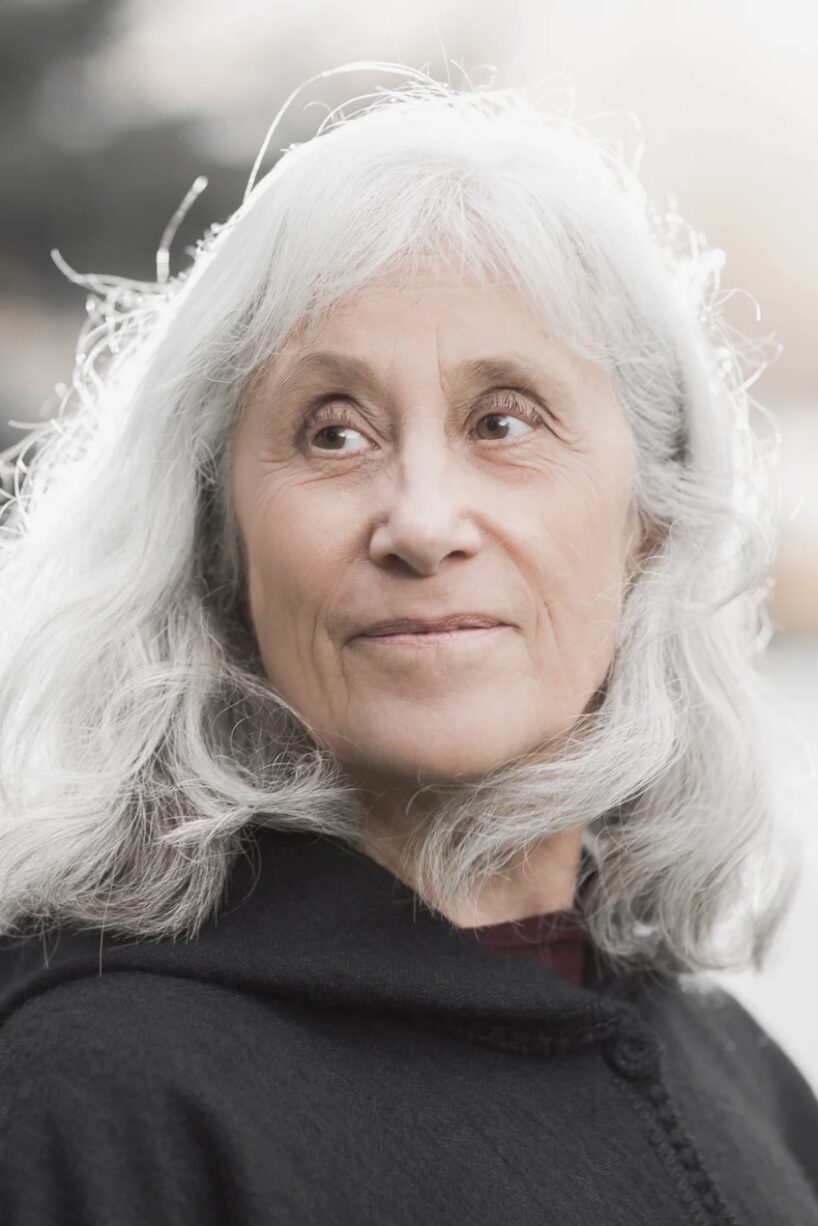
“I am a mother, a widow, a friend. As a pediatrician and a family therapist, I have shared in many people’s experiences, and tried to help. I hope to bring these lives to the page, and to share what they taught me. Please read my blog on SUBSTACK.”