


If you didn't know
Alison Mandaville | Essays
For Darlene Chaney, sister of Cornelius Taylor, crushed in his Atlanta, Georgia tent home by a “large earth-moving machine” on January 16, 2025. And for M, mother of J.
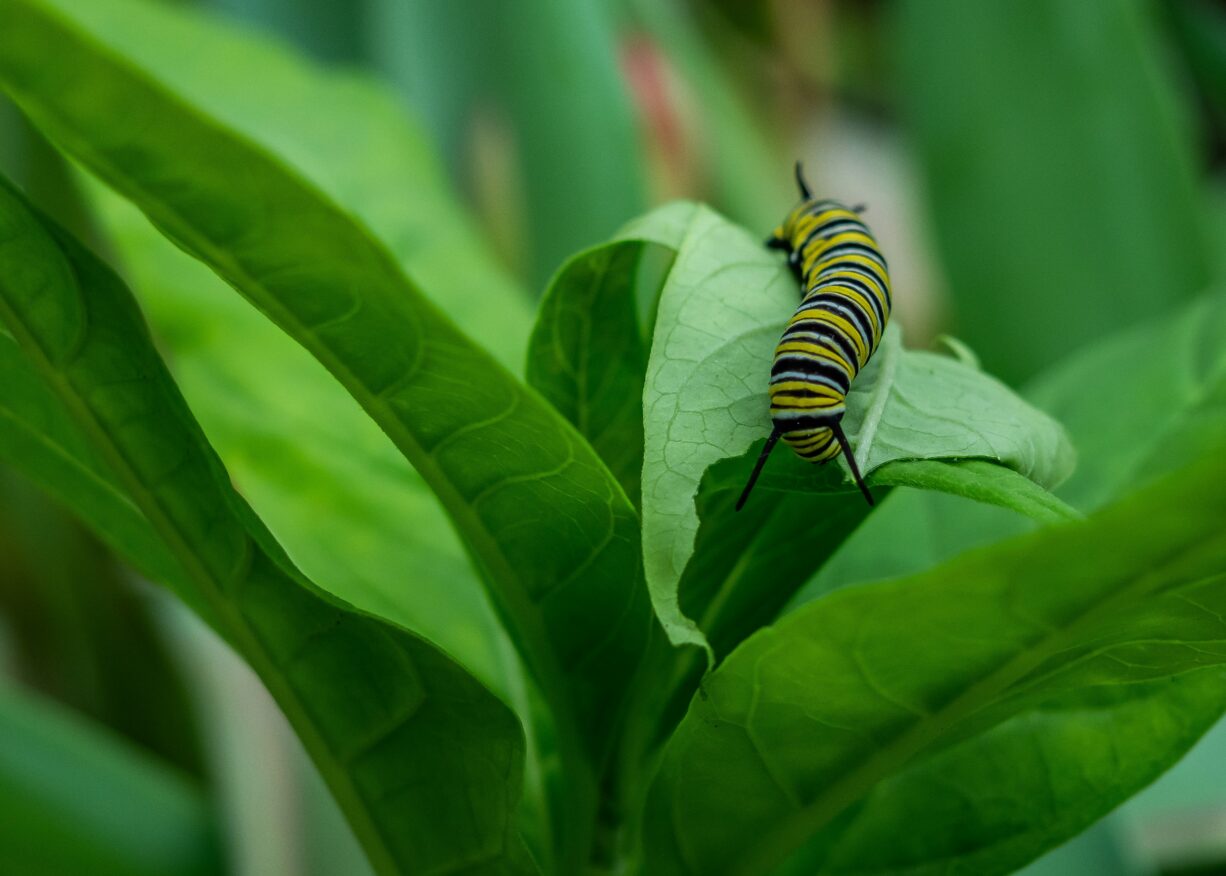
In 1969, in Portland, Oregon there was a summer ritual of burning out the tent caterpillars that enveloped the neighborhood street trees in white gauze architecture. Overhead, above the pavement, the caterpillars created secret air pockets between swathed boughs, a multitude not quite invisible, moving, not quite synchronously. Millions of eggs had been laid and millions of caterpillars devoured the leaves of hawthorns, alders, and willows in a circus of the private white tented rooms they made. Tree houses. Tree feasting halls. You could stand under them and hear them eating. The neighborhood men gathered at each tree with their barbeque fluid and flame throwers and matchbooks and cigarette lighters. Cut out the nests. Threw them to the ground, flaming. Or they set fire to the tents still in the trees. All their children watched, crept close to see the writhe and black curl of living things and their homes. Under cheap canvas tennis shoes, sons and daughters ground the creatures to a yellow slurry. As they dropped. You did this. An entertainment, of sorts. An excitement in the sag of summer, at least.
*
He was born a month early. Cone headed. Vernix covered. White cream in his folds, white-coating red skin and white softening the red swollen testicles. First instar. It was a fast passage. A young mother. The gloved nurse scrubbed away the evidence as he wormed and wailed.
*
Tent caterpillars come in waves. Boom. Bust. If you didn’t know this, you’d think the burning did the trick. Kept them away for years. And, though you might not have noticed at first, maybe this also kept away the birds that eat them. Robins. Blue jays. Red-winged blackbirds. Perhaps not unlike what DDT was also doing. It was contemporaneous, anyway. The effects on birds. And unintentional. Probably. Perhaps. Like DDT.
*
Vernix may protect the skin in utero. From the corrosion of amniotic fluid. Inside and out. May protect the newborn skin from bacteria. May protect the GI tract from water borne bacteria. Sea lion pups also have vernix. If you didn’t know this, you’d think the washing made him safe. He seemed safe.
*
Tent caterpillars are, on the main, a social caterpillar. They collaborate on scouting trips: food finds. Like a progressive dinner with pheromone trails to lead each other on. They eat so much in their final instar that it sounds like rain as their feces drop from the trees. They return to the tent to digest. Together. The trees regenerate unless they are very sickly. Most are fine. They regrow quickly. They have reserves. Usually. Unless there is a drought, or unseasonable heat. Unless the climate changes.
*
Human children are social. Rely on others for their food. They rarely feed alone, although solo eating can increase with age.
At first, he ate anything. With family. Breastmilk. Apples whole: stem, seed and peel. Green pesto of homegrown basil leaves. Then, almost suddenly, he refused to eat many things, focused on pasta, pizza, clearly identifiable vegetables. And candy. Lots of candy. Artichokes flummoxed him. He ate two family pizzas once when you weren’t paying attention. He became uncomfortable eating with strangers. From strangers. Eating stranger foods. He grew anyway. Thin. Medium tall. Clear eyed.
*
Instars are stages. Of growth. Which maybe you knew. Levels of maturity as the body becomes different than it was. Insects outgrow their own bodies. Humans replace their cells too, but it is less apparent, so gradual that only more distant relatives, perhaps your aunt, visiting from another state, might notice your new instar—My how you’ve grown!
Tent caterpillars have many instars. Grow and shed. Like humans in a way. But different. Grow and shed. Unless they are interrupted. Maybe burnt or eaten. Or parasitized, with viruses. Nuclear polyhedrosis virus, to be precise. Which enters the caterpillar or moth and uses the creature’s cells own DNA to replicate, as all viruses do, until the cells burst. The viral infection becomes more likely as the climate changes. Warms. Then the infected caterpillars thin, liquify. They leave behind their lovely precise stripes of color, their lengths stitched in orange and black, a white almost blue; and their fuzzy, albeit slightly toxic, spines. Deflated.
*
Tent caterpillars, the moths they become and the eggs they will lay, live for one year. Caterpillar generations never know each other. This is called being univoltine. One cycle. One volt. One turn around the sun. Which you might not have known. Humans have many volts around the sun, but because “multivoltine” in scientific terms means having many reproductive life cycles in a year, humans are instead classed as continuously iteoparous—they reproduce regardless of season, or year. Though humans could also be seen as experiencing partial voltinism—that is, the reproductive generations are not isolated; they overlap in time. Human generations know each other: grandparent and grandchild, godparent and godchild, aunt and nephew, mother and son. Each human generation’s reproduction might overlap with the next.
If humans were plants, which arguably they are not, they would be called polycarpic—each individual capable of reproducing many times over a life cycle. Polycarpic plants can be quite flexible and diverse in their goals within their own species community: some members of a species aim to grow the biggest leaves, live long, forgo putting much energy into producing much seed; others funnel energy entirely into reproducing—madly, repeatedly. Foliage be damned. Those who are fecund might (but do not necessarily) live shorter lives, be smaller in stature. Some, faced with intense competition from other plants, from environmental stresses, might hunker down, also stay small, conserve their resources, their energy. Their volts.
*
It’s been two years since you’ve seen him. Mostly he hides. Lives in his truck camper shell. Which is outfitted for sleep and computer and with the things he finds. Buys online. It’s cozy. It has solar power and a battery. He works, goes out for his food. Cocoons. Thins. Warms. Tries to sleep. Is alone. Imagines things. Are real. For example, that the police took him away as a very small boy. Third instar. Several times. This did not happen. The police did, however, detain him once in late middle school. Sixth instar. For playing with fire. In this way, each reality is a story that grows from another reality. Somehow. This is true for all of us.
Eventually he makes webs, of a sort. Games. Electronics. Solar showers for his truck. He avoids people. Houses. You do not hear from him. Not even the yearly thank you after Happy Birthday texts. His mother, whose life overlaps with his, worries. One day he disappears.
*
The birds are back. In your back yard. But you wonder what it is they eat. If they eat enough. For birds are in decline. Long decline. For 500 years. Maybe there are 25% fewer birds now than during the time of Shakespeare, Incas, Ming. So estimate the bird scientists. And it’s been years since you have seen as many tent caterpillars as you saw as a child. Of course, other animals also eat the caterpillars. Rely on them, perhaps. The boom and bust. Frogs and bats. Voles. Even mice. But mice also eat what you eat. So while the bats and frogs are a concern perhaps, (probably, pretty certainly), the mice—well. You are not so worried about them. Yet.
*
This is not him. But a man is having some difficulty. Maybe it is temporary. He is probably not someone you know. Does not live near. Is named Cornelius Taylor. Has a sister. Who knows him well. Who he calls every week. He is an artist who lives in a tent of air, staked to the ground. He draws. Reads science fiction. Stays positive. Smiles in the photo. He has made this home. Not in a building. In a tent. In Atlanta, Georgia. Among other tents, with neighbors. A neighborhood.
Maybe he hears something. The roar. What is outside his tent. Engine. Things breaking. He wonders.
Maybe he is he sleeping. Dreaming. The engine is hot, sounds burning. Weight. Something is on him. They are clearing him out.
After, he says his own name to the police person. And
Something is fallen on me.
*
The tent caterpillar that survives fire, DDT, viruses, birds, mice and frogs, will likely cocoon up and metamorphose into a moth. Final instar. In the Western United States it is probably the Malacosoma Californicum moth. In the East it is likely the Malacosoma Americanum. Both are a gentle brown, with a head of soft fur and wings of velvet, horizontally striped with two modest lighter bands, trimmed in alternating pattern of light brown and cream at the edges. As if you had cut a narrow cross section from a handmade wooden chess board, an earthy and regular line up of dark and light rectilinear browns, and then grafted this decorative element, this precisely alternating line of colors, to the trailing edges of the moth’s otherwise unassuming robe. Seamless. The moth. The mother. She mates, lays eggs within a day of emerging from the cocoon. Dies.
*
It is easy for you to lay blame, but perhaps any of these endings are a kind of natural. Because humans. And because humans are natural. And because natural is not the same as happy. And because metaphors. Are also natural. For humans. Reality remembered, so understood, grown from reality. Yet it is important to remember humans are not caterpillars. And vice versa. Humans have big brains. Two feet, usually. Can plan. Choose. Choose again. Caterpillars have small brains that nevertheless adjust in metamorphosis to control new things. Like directing the movement of the moth’s two wings and six legs (or just nubs in some species) instead of its greater number of caterpillar feet (often sixteen). You tell yourself these things. You remind yourself. You differentiate and analogize, perhaps because you cannot seem to stop the fires or the neighborhood men, the people who drive human bulldozers and the people who sent them. And watch them.
Unless you are them.
Even if you are them.
*
This is him. His skin was always beautiful. Rosy. Soft. Hair wild curls in his hazel eyes. Nose often running, crusty. Second instar. He liked to touch your necks with his fingers. Feel skin. Smile as light, god yes, and—sorry—like an angel. He liked to come lie in bed mornings he stayed over while his mother worked. Third instar. Lying between you both. Your final instars.
He ate. He grew. You watched.
Seventh instar. The year he lived with you. Afterschool, on his way home, he found things discarded, made them into new things behind the garage. A lawnmower reconstructed into a hovercraft that almost worked: a lofty architecture of discarded plywood, screws, motor, fan, a black skirt of plastic visqueen. He could blow open an airspace almost suspended, safe above ground.
Alison Mandaville’s prose, poetry, and translations from Azerbaijani have appeared in Redivider, Terrain, Four Way Review, Diagram, Magma, and World Literature Today among other places. A Fulbright scholar, she has received grants from UNESCO and the Open Society Foundation for work with women writers and artists in Azerbaijan. She splits her time between Seattle and Fresno.