


excerpts from Three
Na Zhong | Fiction
The Woman
Long before she became a mother, the woman was a little girl living with her parents in a compound shared with five other families. The compound had belonged to a landlord before it was confiscated and reallocated to a state-owned hardware company, to house its employees and their families. None of the original furniture survived the confiscation or reallocation; all that remained, as far as the woman remembered, was a beautifully engraved wooden door. She would spend her childhood there.
As a child the woman was sickly, her hair thin and sallow just like that of her mother, who’d been wearing a wig, jet-black and stiff as a coconut shell, since her early thirties. The woman had a brother two years older, who was bald, belligerent, sociable, and a good hunter of sparrows and frogs. He would roast his captives and gather his friends in his room to feast behind a locked door. The woman, always hungry, would beg him to let her in, but he never did.
The woman’s parents made decent salaries but were spendthrifts, wearing corduroy pants and leather loafers when other families mended their trousers and sewed their own cotton flats. As a result the family was chronically in debt. The woman’s mother was frail from birthing three children in five years and losing the youngest, so she treated herself to a boiled egg daily. The woman, on the other hand, only had a boiled egg once a year, on her birthday. Short of breath and faint-headed from malnutrition, she’d collect dried chicken feces and sell bagfuls to a traveling fertilizer collector, who paid five cents per bag. With the little money she saved, she’d buy herself deep-fried, sugar-coated peanuts. But sometimes her neighbors would steal her bags of chicken feces, and all she could do was curse and spit at their doorsteps when she passed by.
In her stories the woman was always the victim, the one to be pitied. In her stories she was also a fighter, because no one but herself would fend for her. Consequently all her stories evoked in the mind of the listener—more often than not, her daughter—a grimace, a pale pinched little face with a glint of bitterness. It greatly detracted from the effect of her stories, which were told to invite love. Instead they created distance, a sense of suspicion and alienation (surely it wasn’t that bad!).
Before she turned six, the woman spent most of her days at the kindergarten with her brother. Sometimes, when their parents got off work early, they’d pick her brother up and take him to shop for snacks. They never took the woman with them, but would leave her a little pear. Instead of eating it, the woman would sink her fingernails in until it was covered with browned, crescent-shaped wounds. This image of the ruined pear was more powerful than all her stories combined. But she had only told the story once, she could hardly finish it. In the end she started crying, her face flushed and crumpled, so the daughter stopped pressing.
Left on her own, the woman would wander from building to building around the kindergarten. One late afternoon, she slipped through the gate that opened to the staff dormitories and found her teacher kneeling in front of a mass of people. Her face was obscured in the dusk, and a sun-cast shadow stretched long and thin behind her. The woman grew scared and ran away.
The woman’s mother worked at a high school. At first she was an accountant, but she kept forgetting rolls of cash in various places—restroom stands, bank counters, hospital benches—so she decided she could not be trusted with money. She asked to teach instead and was allowed to teach Chemistry. At first the students made fun of her, for she was short and shriveled, but eventually she won them over with her vivacity and fierce loyalty. They called her Granny and would bike twenty kilometers to visit her years after graduation.
The woman’s father, on the other hand, was very handsome. The oldest of four brothers, he was tall and lean, a beige trench coat always draping from his right arm. He graduated from the local branch of a renowned military school and pulled off the mustard-green uniform breathtakingly well. Once the civil war ended with his party on the losing end, it became difficult for him to find a wife. The woman’s mother, being the daughter of a landlord’s youngest concubine, couldn’t afford to be picky. They sat down for a meal at their matchmaker’s home; she made a rabbit stew that he devoured completely. Their son was born a year later.
*
The revolution, which started when the woman was five, was in full swing when she turned nine. One night, three soldiers showed up at the door and took away her father. The next day on, the neighbors kept their distance from the rest of the family; they had always found their corduroy pants and leather loafers too flashy for their liking. Days later, the woman’s mother was informed of her husband’s whereabouts: in an old temple downtown that had been converted into a prison. Only children were allowed to visit, so the woman and her brother went, bringing two deep-fried scallion pancakes for their father. In a dim hall they found him sitting cross-legged on a layer of dry hay. They were in shock, slightly scandalized: they’d never seen him sitting like that, he who always held himself upright and would smack the back of their hands with his chopsticks if they misbehaved. Throughout the visit his face was sealed in a thin, taut smile, which was strange to behold, for he’d always been stern, aloof, stingy with affection toward his children. The woman and her brother held each other’s hands and smiled back, but when they stepped out, their faces were wet with tears. From shame or pity, they couldn’t tell.
On the revolutionary committee board was a woman who lived in the compound, worked with the father, and had a crush on him. On weekends, when the father took the bus to visit his mother in the city, she’d follow him onto the bus, and they’d spend an hour together on their way there, and another hour on their way back. When their intimacy finally reached the ears of the woman’s mother, she started packing right away. She’d take both children with her. The father cried, “But I’ve done nothing!” Coolly, she replied, “Exactly. You did nothing—to stop her.” In the end she agreed to stay, and the coworker stopped taking the weekend bus.
But it was thanks to the coworker that the father didn’t suffer much beyond living in that dismal room for over a month—hundreds in their town had perished during those years. When he was released, he locked himself up in the kitchen, where all the knives and sharp objects were kept. The children were overwhelmed with confusion. The woman’s mother sat herself in front of the door. For the entire afternoon, every other minute, she’d knock on the door and murmur her husband’s name. Not a sound from the other side. At dusk, when the door finally opened, he stepped out. “What’s for supper?”
The woman’s father had a good heart, but he wasn’t gentle. The woman’s mother, blaming herself for her son’s baldness, had tolerated his belligerence, the protective mechanism of a child who always had to wear a cap. He was constantly in trouble. Whenever a neighbor came with a complaint, the father would take off his leather belt and chase his son around the room as if he were going to beat him. He never did, but the possibility of violence left its impression. In his teenage years the woman’s brother took up boxing. He never outgrew his mother in height, but was stout and muscular, his gait showing the leisurely arrogance of a bulldog. The father, on the other hand, dwindled and dried up. But that happened slowly, over decades.
Shortly after the father’s release, the revolution was over. A surprise awaited everyone: the woman’s mother was pregnant again; she’d give birth to a girl.
Over the years the woman had said many things about her sister: she was selfish, vain, rather stupid, but even the woman couldn’t deny that as a girl, her sister was moderately pretty. She had more hair than the woman and her mother combined, which the woman cut carefully to shoulder length, with a fringe that fell right above her hazel eyes. In an old picture, which would sit on the woman’s bedside cabinet for years, the woman and her sister looked like twins with the same bob cut, their eyes looking not at the camera but at some point slightly above, the woman bespectacled and already in college, the sister freckled and shy, still a high schooler. She was sweet, so it was no wonder the woman’s father doted on her. From his trips to the city he’d bring back ten things for the sister and not one thing the woman had named. He gave the sister piggyback rides when she was tired from walking. She got lost twice on her way to the kindergarten, and after the incidents the woman was tasked with escorting her to and back from the school. This meant the woman had to leave early and miss the after-school cleanings. For this she was often beaten by her teammates, who also had siblings and didn’t understand why she made such a big fuss over hers. The woman never breathed a word to her family.
As a matter of fact, thirty years later, the woman no longer spoke with her sister, or her brother, or her mother. Her father died when her daughter turned twelve. At his vigil, his three brothers showed up with their families, a legion of handsome sons and granddaughters. Foldable mah-jong tables were set up in front of the tent. Hot tea brewed and served in disposable cups. Petals of the four o’clock flowers paper-thin in light from bare bulbs. The miniature artificial mountain stood in the dimness, cookie-crisp with thousands of holes. Snug in a corner behind her mother, the daughter eavesdropped on the adults, amazed at the lack of detectable sadness in their manner, her mother’s smiling silhouette nostalgic and composed, the strangers’ attention to them familiar and courteous. Basking in this new familiar love, one that she’d never experienced at her grandparent’s home, she wished that the night would never end, and the guests would stay here for good. She never saw them again. Years later, when she tried to recall what was said that night, all she remembered was the pair of old leather shoes, high up on the shrine, silent, closed-off, as their owner had been when he was alive.
*
At eighteen the woman failed the college entrance exam the first time. After the result was announced, her father didn’t speak a word to her the entire summer. He broke the TV so no one could watch it, but the woman had a small radio that she often listened to secretly at night. The second time, she got a good score and wanted to study art; she’d always wanted to be a painter. Her mother didn’t object openly but went behind the woman’s back and asked the woman’s teacher to change all her dream schools to teachers’ colleges, which were tuition-free back then. By the time the woman found out, it was too late. Her mother made her a wooden suitcase, which she took to the university, located in the southwest corner of the city.
In college the woman read Chinese translations of Hegel, Nietzsche, Marx, Shakespeare, Schopenhauer. Filled stacks of note cards with lines from the philosophy texts she bought at used book stands. Collected dictionaries: English-to-Chinese, Chinese-to-Japanese, dictionaries on literary theories, modern world literature, histories of detective novels, fashion design, all the countries and regions in the world. She loved them, their heft, erudition, density, the lightness and gloss of each page. In many photos she took with her classmates she held a dictionary in her arms, on her lap, the book closed or opened at a random page, pretending to be engrossed in its content. She wrote poems—everybody wrote poems back then—and kept a diary (which she burned to ashes one afternoon in her early forties). With her classmates she went to picnics in the parks, went on hikes in mountains nearby, shopped at night markets downtown, and made dumplings at their parents’ homes. One summer holiday, she went with a classmate named Z to visit his grandmother in a neighboring village. It had just rained, the road leading to her house was muddy and shapeless, and the roof dripped water and smelled of moss. She watched him transfer buckets of water from the communal well to the giant urn in his grandmother’s kitchen. Whenever he passed her, he’d flash an apologetic smile at her, and she thought, what bright eyes, what a good heart.
(Shortly after she set her diary on fire, upon hearing about Z’s death [liver cancer], the woman started telling the daughter about Z, confessing that he was “the love of her life.” “Why weren’t you with him, then?” the daughter asked once. “But then there wouldn’t be you,” was the woman’s reply. “But I’d always be me,” the daughter answered. “Whoever your daughter is, that would be me.” Strangely confident that her father, so eclipsed by the woman, played no part in the making of her.)
Z had a best friend who always tagged along when he came to see her. The friend was sulky, reticent. Like a shadow he stood between their conversations, jokes, unexpressed feelings. Both wrote to her. Z’s letters were short, always about what had happened to him the past month and what he planned to do the next month, while his friend’s letters were never about facts but about feelings, the vague anger he felt toward the world, other people, the poetry of his melancholy. The woman felt dizzy reading his sentences; it was thrilling to receive words drenched in such a high concentration of unhappiness; on the other hand, Z’s letters, with their straightforward facts and syntax, always made her knees weak. She responded to them both.
In the meantime, her sister graduated from middle school, and her brother finished community college. For weeks her mother visited the township office and finally got her son an entry-level post at a state-owned petroleum company, his dormitory a fifteen-minute walk from home. The woman entered her senior year and spent three months interning at a high school. While she was there, she wrote a novella and submitted it to a few magazines. Three months later, an editor from one of them wrote back with suggestions for a revision. She never replied, because writing wasn’t something she took seriously, and besides, she was faced with a bigger problem: with no connections in the city, she was assigned by the government to teach in a town she’d never heard of.
The Town
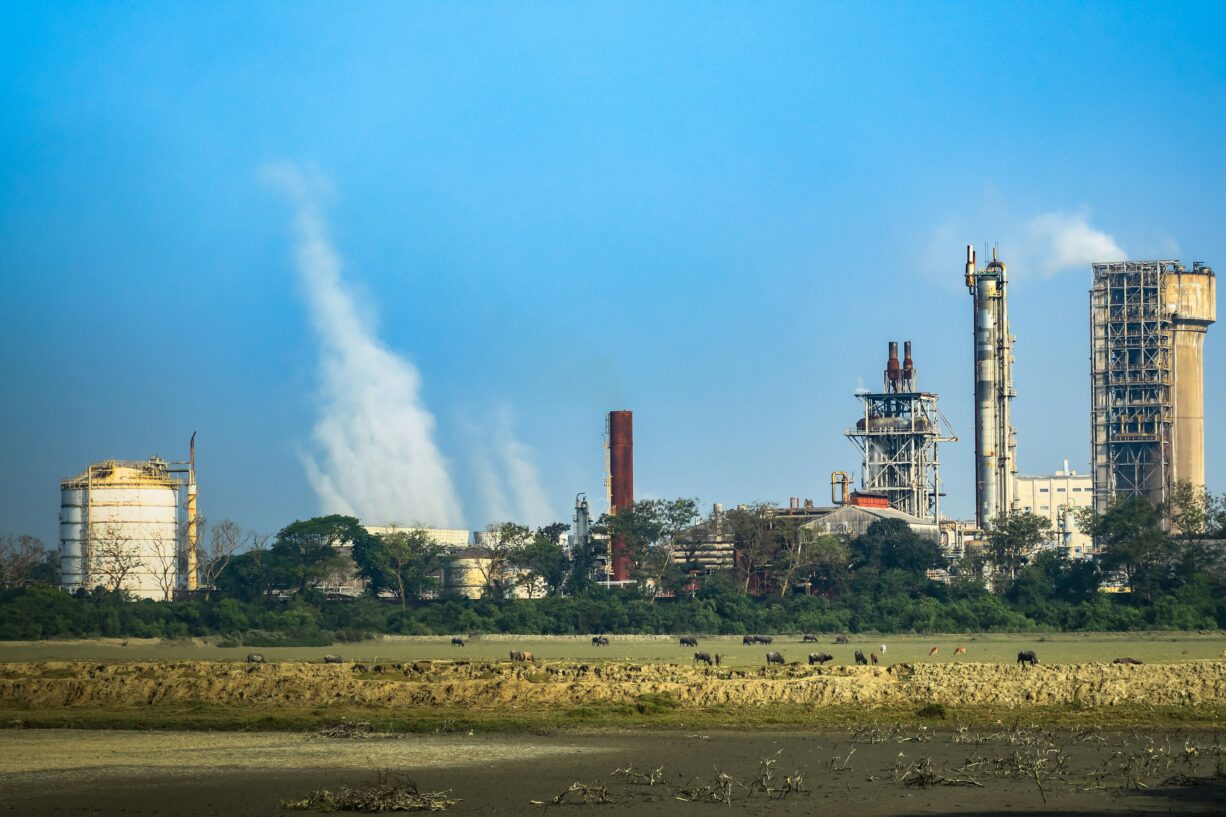
The town was known for its fertile land, ideal for growing cotton. When the new government was founded, a team of officials and experts visited and decided to turn the fields into factories. There were two big factories: the steel factory and the fertilizer factory; two smaller factories: the laundry powder factory and the cardboard factory; and dozens of puny factories doing whatever the bigger factories did but at a fraction of their prices and with much lower quality. With factories came young men, with young men came fun, desire, violence. Two hospitals were built, specializing in treating burns and fractured bones. Then came the gynecologists, the kindergartens, two middle schools, two high schools—one reputable and rigorous, the other less so. The woman was assigned to teach at the lesser school.
The woman’s mother tried to get the woman reassigned. They set off for the town on a Monday. The bus ride was airless and dusty. They got off at the stop in front of the post office and walked down the main street—the only paved one—for thirty minutes. Patches of fields interrupted by buildings on either side. The longer they walked, the emptier the woman’s mind became. When they reached the town hall and asked to see the director of the education department, the guard told them he had stepped out for lunch and promised to let them know when he was back. Hot and drained, they sat down on the shadeless curb and waited. The woman’s mother held up a small parasol for them as the woman fell asleep on her mother’s lap. When she woke up the air was no longer choking, the sun was sinking westward, and the guard’s room was empty. They bought two ears of boiled sweet corn at the station and took the last bus home. (Only once, of the many times when she repeated the story, did the woman admit that her mother had probably loved her.)
*
At first the woman returned home every weekend. A month later, every other weekend. After half a year she visited home once a month. She enjoyed teaching and taught well; some of her students would show up at her dormitory to chat with her until supper time. When there were no visitors she’d brew a pot of soup on the only stove shared by the entire floor and read a poetry book or a romance novel sitting beside the little blue fire. Per her mother’s request, she sent back half of her monthly salary. At the beginning of the month she’d buy a quarter of a roast duck and savor it throughout the evening. Toward the end she’d boil some vegetables and a cube of tofu and call that a meal. She couldn’t believe how free she was, it felt criminal, it shouldn’t be allowed! She taught a few other girls how to knit, and they would gossip over a bag of tangerines until those who had to teach early the next day came banging on their door. One girl would read her boyfriend’s letters aloud after their fights, pausing several times for her audience and herself to recover from their laughter.
Many things seemed silly and frivolous to the woman back then—marriage, a career, money. The headmaster took a mysterious liking to her and wanted to set her up with his son, but she laughed it off. Her department recommended her to participate in all kinds of teaching competitions; she always ended up second place, but never felt apologetic. In her spare time she joined a Marxism Club, which met regularly to discuss current affairs, literary theories, the future of their generation. They’d bike fifteen kilometers to a dam on the outskirts of the town and sit in a circle on its lawn, their faces lit up by candles. In the early hours of the next morning they’d pedal back, the women sitting on the back of the men’s bikes, arms around their waists.
Z and his friend wrote less often now, but they still came to visit her from time to time, watching movies, taking long walks in the park, biking to nearby sights. The last time they visited together the woman took them to a dumpling joint, and afterwards the three of them walked to the concrete bridge that straddled the river the town was named after, Clear Green River. The river was neither clear nor green but a phlegmy yellow, colored by the wastewater from the fertilizer factory, in fact they could see one of the pipes pumping wastewater into the river, the woman pointed to them, right there. With a strange pride she told them that everybody who came to live in this place would develop rhinitis within the first year, which was what had happened to her. In the past few years she’d come to develop an affection for this town, whose newly paved streets were wide and smooth, unlike the dilapidated, crowded streets in the city or her hometown. At some point she realized she was the only one talking and that her voice sounded shrill and ridiculous, but she couldn’t stop. The man she had loved all this time pulled out a cigarette, and his friend, the one she feared and even felt a little repelled by, lit it for him with his own lighter. From their silent choreography she realized that they’d come to say goodbye. Because she’d been unable to make up her mind, they could never have the duel they’d secretly looked forward to, and now they’d worn each other out, and their passions for her had cooled.
*
That year the woman turned twenty-seven. She began to notice subtle changes in herself: the darkening freckles on the bridge of her nose, the growing white hair, the body that began to betray its owner. She was diagnosed with cholecystitis, the price she had to pay for all those indulgent nights of roast ducks and tangerines and sunflower seeds. Once again when she visited home her father was taciturn, and all her mother would say was how quickly a woman’s youth expires. (“And you’re not pretty to begin with.”) At school, women or her age were getting married and having children and moving away. And the older womenfolk began to stop her on her way to the classroom and make sympathetic noises. They offered to match her with someone they knew, and the men they thought were “perfect” for her went from old bachelors to divorcées with toddlers to men with glass eyes or wooden legs. The thought of being pinned down to them made her shudder.
Around the same time dance clubs began popping up all over the town: behind the laundry powder factory, next to the steel factory, across from the fertilizer factory. Workers held pre-dance parties in their dormitories. A friend of hers took her to one, and soon she became a well-known figure among these circles, “the girl with a white hat who dances really well.” She knitted the hat herself.
One evening, she walked into a room no more crowded or noisy than usual. A handful of people had already taken seats on the bottom bunk beds, the ladders leading to the upper bunk beds, the chairs and the windowsill. Among them she noticed a new face. A cobalt blue scarf over a dark gray coat, a full head of soft long hair, a smooth face behind a pair of silver-framed glasses. A cigarette perched between his long fingers, white and slender. He didn’t speak a single world to her, but he kept his eyes on her the entire night. When he laughed there was no sound, just a pair of dimples flickering in the dying daylight. She felt scorched, like one could be by snow, a full moon, the fluttering of a bird’s wings.
The next evening they met at a dance club. He bought tickets for everyone in the group, coffee and ice cream bars included. When the Blue Danube played, he invited her to dance. But he didn’t know the first thing about dancing and eventually she had to say, laughing and faint-headed, “You’re stepping on my feet!” “I, I’m sorry.” But he wouldn’t let go of her hands.
After that he’d often show up in front of her dormitory building to taste her noodle soup, fix a broken chair, wash her bike. She’d visit him at his dorm, too, to ask him for the copy of How the Steel Was Tempered she’d lent him, or borrow an umbrella on a pouring afternoon. It all went very well until one day, when they were hanging out in his dorm, she pulled out a drawer and discovered his ID. According to the date written in the birth section, he was five years younger than her. Five years! When she was five and fighting with her neighbors, he had just been born; when she was knitting sweaters for her baby sister (who was studying at her school and living with her), he had fallen into a public well in his village and almost drowned; when she was settling down in this town and putting her past behind her, he was harvesting wheat in the field until one day the postman brought his offer letter from a professional school. She could go on and on about the chasm between them.
At first he was dismissive. What difference did five years make? He could be twenty-five or six or seven, it just happened that he was twenty-two. She shook her head: now it all made sense, why he was never serious; all he did was tell her jokes jokes jokes. She had never laughed so hard at an oddly-shaped orange, a flattened tire, or a downbeat dog before. He’d still come to her dorm, but she’d wave him away: go, go find a girl of your own age, who has yet to feel the weight of living crystallizing in her bones. She began going out again, avoiding circles of which he was a part, dancing until the evening classes were over and her sister was home. On weekends she went to cities and towns to stay with her friends, who’d promised to set her up with someone they knew. On the buses, on the trains, she tried to imagine what her life would be like in two years, ten years, and found her thoughts invariably circled back to him.
One Sunday evening, after she returned from her urban wandering, her sister told her that Y had visited while she was away. “Ma chatted with him for quite a bit.” The woman pressed her sister for details. Her sister didn’t like the food at the canteen, so her mother had offered to come over and cook for her while the woman was away. Yesterday afternoon, while her sister and her mother were whiling away their time in her dorm, Y dropped by with a potted cactus. With her usual easygoing manner her mother asked him if he was her older daughter’s boyfriend. “Well, I’d love that,” he replied, “if only she’d let me.”
“Come talk to me.” Her mother pulled out a chair for him.
Looking back, it was episodes like this that the woman was most fond of telling, serendipitous incidents in which she played no part, where the entire universe came to her rescue as she dozed, blessedly ignorant, on the train to elsewhere.
The next weekend her mother came over again. “I told him everything about you. I told him that you have a bad temper and are as stubborn as an ox. I told him you have a sharp tongue but a good heart. He nodded and murmured, ‘I know, and I don’t mind a bit.’ It’s unlikely you’ll get on with your in-laws, but his parents are from the village and live far away. Now that you’re getting on, trust me, you won’t find a nicer fellow than this one. What do you say?”
Officially they went out for three months before an apartment unit became available for rent at the woman’s school; only married couples were eligible to apply. Over lunch, at the steel factory canteen, she told him about the news. “So … what do you think?”
He took his time chewing the chili pepper oil-drenched pig ear slices (thin and translucent as film, their aftertaste sweet, like walnuts). Then, in an excited whisper: “Let’s do it!”
The next day they hurried to the town hall and got married. So light-headed were they that neither noticed that the clerk had spelled her first name wrong, reversing the order of the two characters. (Nobody would notice the mistake until thirty years later. Once they did, a new photo was taken and a new certificate issued, but when the government wanted the old certificate with the wrong name back, the woman lied and said she’d lost it. She could never take a picture looking like that again.) In the photo, with her head coyly tilted to his side and half of his face crowded by the wine-red, thick-framed glasses, they looked exactly like the youths of their time, blind with optimism in the cynical, sophisticated eyes of their posterity. For this very occasion she had knitted a sweater for him, in the color of hawthorn berries, with a V-shaped neckline and a ribbed waistband decorated with amber buttons. Three weeks before the wedding, she brought him home for lunch and watched her mother play the overly gracious hostess, her father the man of the house, hard-to-please and protective of his daughter, albeit the least favorite of the two. Afterwards, as she helped her mother clear the table, she saw her father hand out a cigarette to Y (who had passed his test), and the two disappeared into the balcony, smoking side by side, the most important men in her life, their voices absorbed by the green sash door closed behind them, surrounded by pots of geranium that her father so meticulously tended.
A raucous wedding night. Colleagues from the school, coworkers from the factory, headmasters, factory managers. Speeches, red envelopes, practical gifts such as a thermos, an electric fan, a rice cooker, a tea set, matching pillowcases, matching electric blankets, an enamel basin with a pair of mandarin ducks swimming on its bottom. The newlyweds bought raw peanuts and roasted sunflower seeds and liqueur chocolate candies. After it was over and everyone was gone, they swept the floor and carried the chairs back to the classroom next door before collapsing on their bed.
So began their life together, wound up like clockwork. Going to work, returning home, shopping for groceries, cooking, having supper, going to bed. The woman lost two brand new bikes in a row at the farmers’ market and cried her voice hoarse because each had cost her three months’ salary. He bought her a second-hand bike and volunteered for an extra night shift every week at the factory. She discovered that he knew nothing about cooking and thought housework was for women; he discovered that her mother hadn’t exaggerated her temper. They fought, then made up. She had a miscarriage. Her mother came to visit, offered some words of wisdom (“don’t go out; keep the windows shut”), and left before the sun set. Y bought pigeons from the farmers’ market and made pigeon soup, supposedly more nutritious than chicken soup. While she recovered, he learned to cook, making all kinds of mistakes, which she’d later recount to the daughter: how he’d toss an entire head of cabbage, unchopped, into a pot of boiling water, how he’d make chives with scrambled eggs until the eggs turned to charcoal and the chives to ashes.
Such were the stories they told the daughter about their time together before she was born: days of joy interrupted by sparks of conflicts, arising from their drastically different personalities, the contradictory habits and ideas they inherited from their past families, and the world outside, abuzz with changes and crimes. Hearing these stories evoked in the daughter’s mind a picture, an impressionistic one, of pigeons, dark kitchens, dripping laundry, drops of blood on the bathroom floor. But she couldn’t help but feel that something was missing. Of course something was missing. Most likely everything that mattered was missing. Somewhere in the act of narrating the past, the past had been trimmed, distilled, transformed. Just as vegetables turn into pickles, the days the woman and Y shared had turned into anecdotes, obtaining flavors from the passage of time. As for what actually happened? Only they would know. It’d be their secret, the secret of the newlyweds: the sex, the failures to penetrate before the final success, the self-education on the art of seduction, learning to cultivate and guide their desire for each other. Yes, the sex, this is the biggest secret all parents hide from their children, the secret of their origin. Which is why every time children get a glimpse of it, they shudder (at the possibility of their nonexistence). Did the woman and her husband invent personas for themselves when they made love? the daughter wondered. And how did the lamb subdue the falcon? If she couldn’t figure this out she’d never decipher their relationship, how they stayed together after all these years, how he let her humiliate him with her rage, how she let his cowardice wear her down. And if she’d never decipher their relationship, how was she supposed to understand what they’d made her witness—and endure—all these years?
Another story from the woman, she had told it many times. Her water broke during the school’s winter break. When the spasms of pain hit, she ordered Y to grab the denim backpack they’d prepared weeks in advance and “go borrow a cart from the guard!” There wasn’t a single soul on campus; most of their neighbors had left for their hometowns to celebrate the Lunar New Year. He rushed out and then was back with a three-wheeled cart, its tires flat as tongues. She climbed into it, a quilt spread underneath her to absorb the shock. They set out for the hospital down the dead quiet street, the rims of the wheels clanking against the asphalt surface, the moon in the sky too big to move. To the locked hospital gate she cried, “If you don’t open it now, you’ll have a dead body in front of you tomorrow morning!” Worked like a spell. On the bench they waited for the grown-ups—the doctors, the nurses—to come, to take over this mess and hand back something nice and warm and new and wimpy. After twelve hours, they did. It was eight in the morning, and the woman’s mother had come, taking the first morning bus. Right there, the grandmother picked the name for the daughter. Let’s call her N.
Na Zhong is a Chinese writer based in New York. Her recent writings have appeared in The Drift, The Kenyon Review, The Equator, among others. A MacDowell Fellow and Center for Fiction/Susan Kamil Emerging Writer Fellow, she co-founded Accent Accent and writes a column at China Books Review. Three is her first novel.