


Family Bonds Cut Deep in Justine Champine’s Novels
December 2, 2025 | blog, book reviews, news
Review by Jonathan Vatner
Needle Lake
256 pp. The Dial Press. $29.00
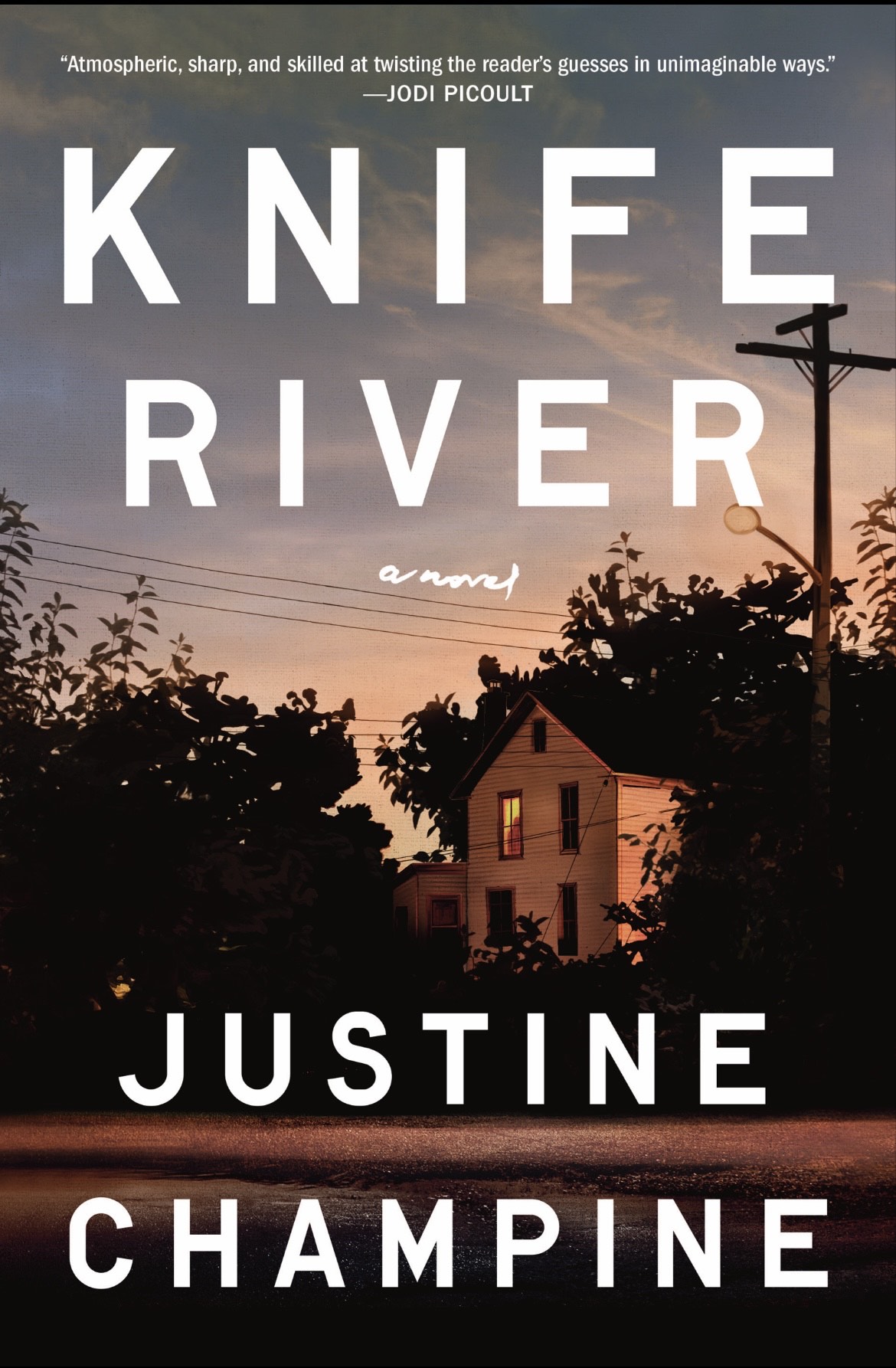
Knife River (The Dial Press, 2024), Justine Champine’s debut novel, begins with the reopening of a cold case. Bone fragments of Jess’s mother, who disappeared while out walking fifteen years earlier, have been discovered in the woods of their hometown. Jess returns home to Knife River, at the northern edge of New York, and moves in with her older sister Liz, to help with the case.
Jess digs up clues, investigates a suspect, and presses the detective, but these tropes of mystery novels seem ineffectual, almost beside the point. The more compelling thread focuses on Jess and Liz, sisters whose missing mother has stunted their lives in opposite ways. Jess floated from girlfriend to girlfriend, job to job, never able to put down roots. Liz remained trapped in their decaying childhood home, alone, having given up on her dreams of a career in aerospace engineering, as if waiting for their mother to walk in the door. At just thirty-four, Liz has aged prematurely into “a frigid woman. A dour woman. The kind of woman with witchlike hair who gets shouted at by teenagers in speeding cars.” The sisters’ halting and poignant reconnection as adults forms the beating heart of the novel.
In Knife River and Needle Lake (The Dial Press, 2025), the lens broadens beyond the expected plot structure of their genres. The crimes that propel the story are compelling, but they become secondary to their effect on the young women who reel under their weight. These engrossing, complex, and lush character studies unfold inside their genre containers, creating satisfying literary hybrids that vibrate with danger.
On the surface, the novels do not connect beyond the sharp-object-plus-body-of-water titles. Knife River is a mystery, and Needle Lake lies closer to suspense. The characters don’t overlap, and they take place on opposite sides of America.
But the novels are cousins. Both are set in rural communities, and both follow the lives of impoverished American women trying to find belonging despite family tragedy.
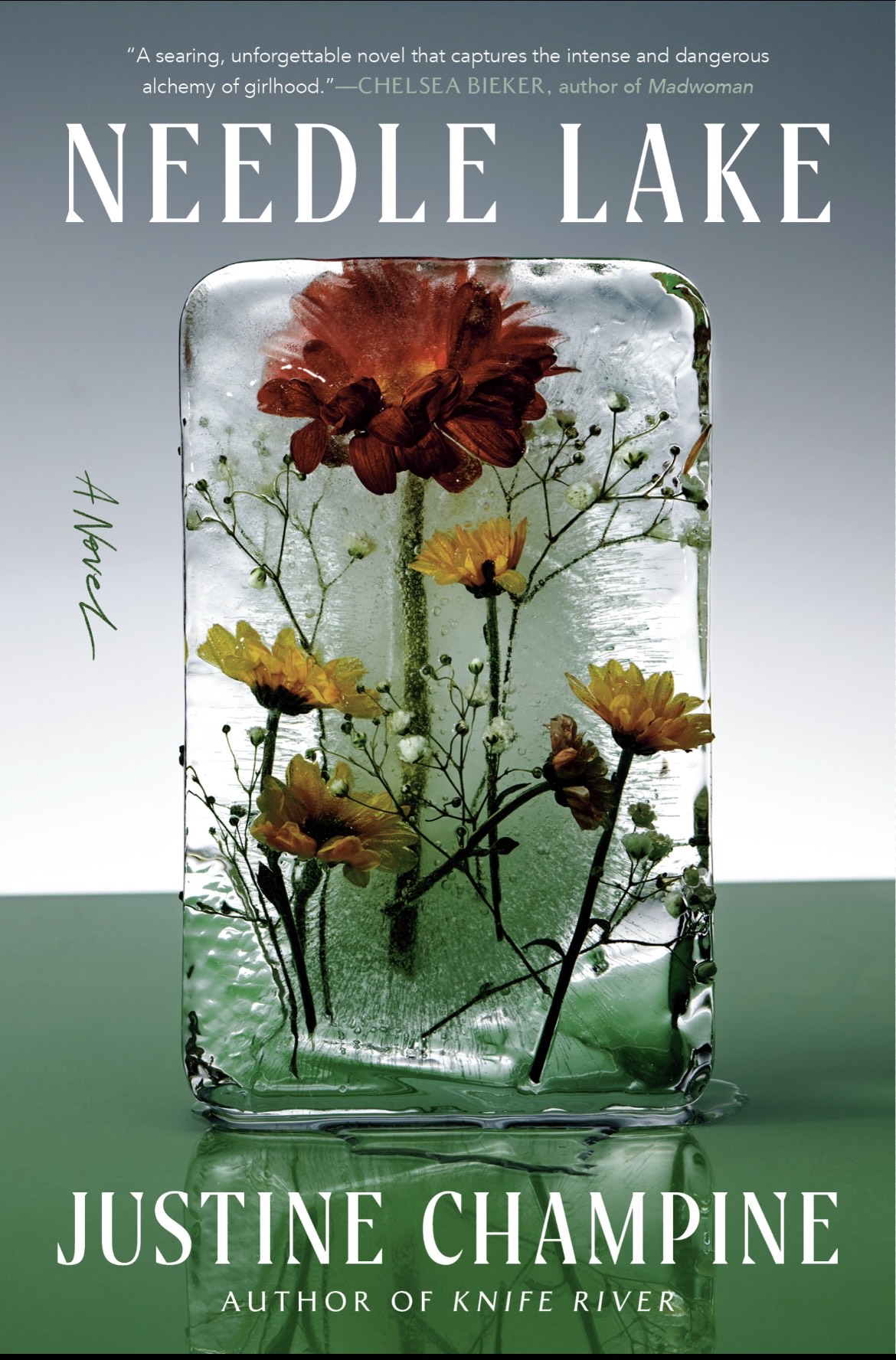
In Needle Lake, fourteen-year-old Ida is a neurodivergent outcast with a geography obsession and a heart condition. She lives with her mom behind their convenience store, and they rent the rooms upstairs to loggers. Ida’s sixteen-year-old cousin Elna comes to stay while Elna’s mother detoxes in a facility.
The visit enlivens Ida’s existence. A high-school dropout and compulsive shoplifter, Elna sometimes seems like a free spirit, other times dangerously troubled. She makes up Ida’s face and braids her hair and teaches her to sew. She also steals from the convenience store and flirts with the loggers.
The tension ratchets up when Elna steals pills from one of the loggers—and gets caught. Ida becomes an accessory to her cousin’s escalating crimes, which bind them together against Ida’s will and force her into a road trip that pries open long-held secrets. The excitement of shadowing the wild Elna becomes overshadowed by the terror of knowing that Ida cannot return to her life unscathed.
Autism is not named except in the book’s dedication, but it permeates Ida’s experience: her persistent feeling of otherness, her discomfort with surprises and disarray, her craving for solitude and tight spaces, and the way her mother treats her with kid gloves. She is bullied relentlessly. Her classmates snicker when she can’t smile right for her class picture, and they pin her to the floor of the bus and suffocate her. The horrific scene is unforgettable: “The minutes passed, and my vision went black, and a burning feeling like a fast fire spread in my lungs, desperate for air. Julie, the girl who used to come over after school and sit with me at lunch, looked at me from a seat across the aisle, quiet, like she was watching a TV show.”
At the same time, Ida faces the impossibilities of becoming an adolescent girl. As a child, Ida’s behaviors were seen as quirky; as a teenager, they annoy her mother and teachers and alienate her from her few friends.
The book navigates these intertwined challenges with a deft beauty, told in eloquent retrospect. “Even though I felt like I was experiencing girlhood on one side of a wall peeking over from time to time to see what everyone else was doing sometimes trying and failing to hoist myself over the ledge, I still knew we were all stuck on the outside of something else. A taller, more imposing wall. None of us were getting to the other side where the boys were, where anger and mischief and bold, unabashed confidence were permissible.”
As with Knife River, Needle Lake’s strength lies in its loving and fascinating exploration of its central characters, who share DNA but have grown into polar opposite teenagers. Both novels use a high-stakes crime as a setting to reveal complex family bonds. And both bring poetic precision to illuminate impossible situations that must worsen before healing can begin.