


Nobody Said Anything
Jeff McLaughlin | Fiction
We stole. We liberated packages from doorsteps. We robbed the convenience store. Sometimes simply because we wanted something. Sometimes to prove something, to show courage. The bravest kids reached into the cars of visiting men, even before it got dark. They were distracted, we’d tell each other. One of us would watch the apartment door and the other would grab whatever was available. We never got anything to sell. We threw away a lot. We stole for the power of ownership and for the power of disruption, or flat-out control. I might have been the youngest, and I might not have been the boldest, but I sure wasn’t innocent.
My mother used the expression ‘fallen on hard times’ to describe our circumstances. She hated the small red light across the street. She hated the ragged, eternal potholes. She hated the peeling paint outside and our flimsy walls inside. She hated that she had been left alone. She hated that we had nothing. She hated that I wasn’t growing up in the small town where she’d grown up and that we’d gotten stuck in the corner of a big city.
It is easy to list these things because when she was tired, which seemed like most nights, she would recite them. She would also say things that made absolutely no sense to me at the time, like that she loved my dad but that she was angry at him for dying. That America was the greatest country in the world but that it was impossible to get ahead anymore.
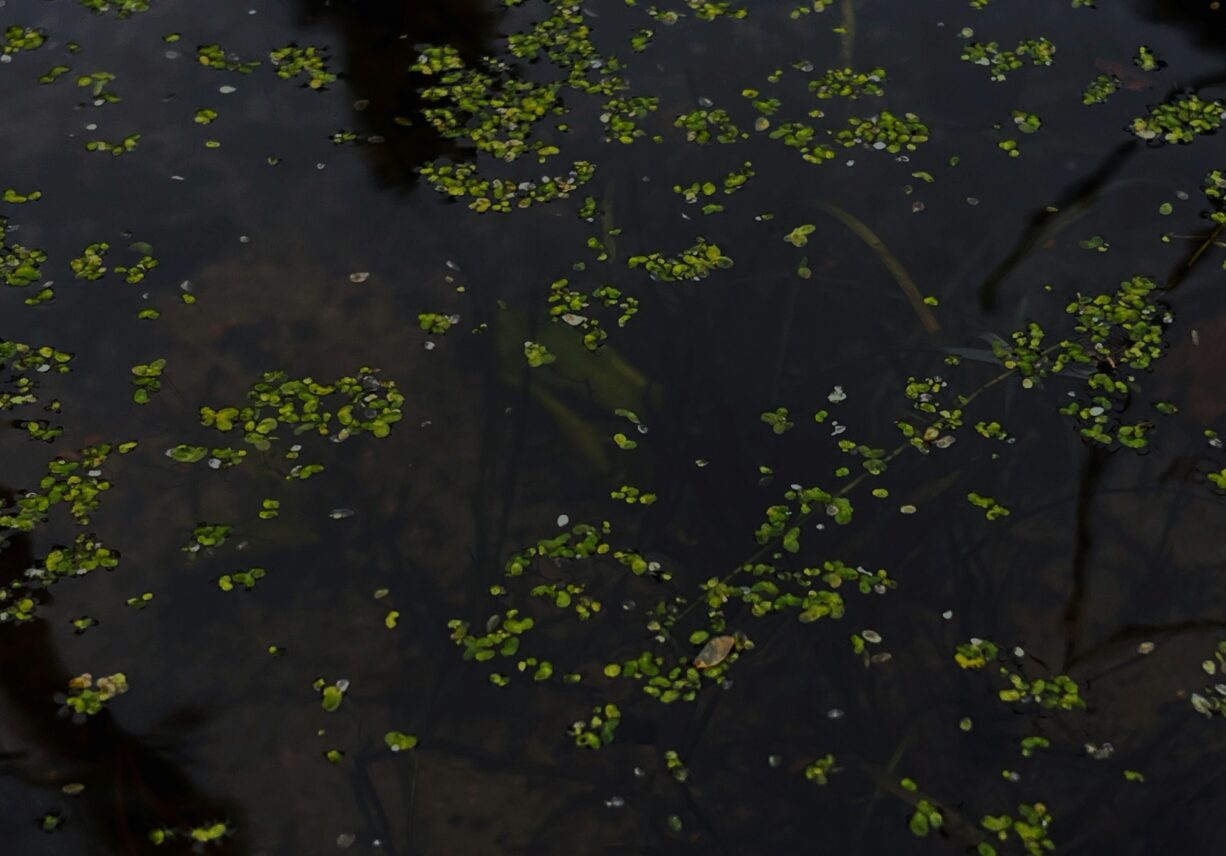
Things changed the summer I turned twelve. She came home early from work. A few of us were screwing around in the pool. It had cracked long before and the real water had drained away. The sun had blistered the exposed blue paint. A few inches of green slime bloomed in the deep end. For some reason, probably simply because of the heat, several of us were lying there with our feet in the muck. That’s how she found us. I noticed her when everyone else stopped talking and there she was, upside down, as I saw it, hair falling around her face as she glared at me. Then she yelled my name. Then she yelled at all of us and asked if we wanted to get sick and die.
We all scrambled to our feet, then clambered up the exposed aluminum ladder. They scattered. I followed her inside. She put me on the couch and pulled one of the two kitchen chairs to sit right in front of me. She was still wearing her uniform. She still smelled like work, that harsh hospital smell. She leaned so close to me I could feel her breath on my face.
Listen, she said. Her voice was back under control. I need you to listen to me. To really hear me.
Ok, I said. I tried to pull away but she gripped my shoulder and squeezed it hard.
You need to be smarter. Do you understand? Don’t put your feet in shit like that. And no more stealing. Yes, I know about the stealing. People here aren’t stupid and they talk and you’relucky you haven’t been caught red-handed.
Ok, I said again, dumb, clueless.
She leaned against the chair and rolled her head so far back that for a moment all I could see was her jutting chin. She stretched and then turned sideways to start unlacing her shoes. If your dad was here he’d tell you something, she said. He’d tell you that you’re not stuck here for forever. If you work hard in school and get ahead you can do better than this. She dropped her shoes and stretched her toes and then wriggled them inside her pale hose.
You work hard, I said.
I had bad luck. We both did. I’ll be damned, though, if I let you make our bad luck your excuse to ruin everything else. You have to get past it.
All right, I said.
She studied my face and I looked back at hers. When I try to remember this I picture what she looks like today, thin, with many fine wrinkles and gray hair. But the few pictures I have of her then show a pretty, round-faced woman with beautiful dark eyes. That was the face I must have watched. She leaned forward and kissed my forehead.
You have to imagine a whole other world, she said. Not one like this. If you keep imagining that you can get there.
I don’t remember what I said then. I do remember imagining other worlds, though. Perhaps not like what she had in mind. I imagined entire other Earths, places far away, that maybe looked like the neat little town where she had grown up, where I had been born, and where we had lived until my dad had died. Clean, neat, and safe places.
But in fact another world existed close by. A world like the one she actually wanted me to picture, full of nice houses. Our apartments were built between a busy two-lane road and a sandy, scrub-covered hill. On the other side of the road were more apartments like ours, no better, no worse. Behind us, beyond the hill, though, a muddy creek ran through a deep ravine. An enormous rusty pipe arched over the water, and one day we started daring each other to shimmy across it, and after one person did we all had to, one at a time, until we all stood on the opposite bank. The old trees so clustered and so thick that nothing grew beneath them. Downstream a deserted house slowly collapsed on the floodplain. It held our interest only for a time, since it had been already stripped empty, everything of value had already been stolen, and because beyond it, perched atop the slope, aligned like castles, loomed a series of houses, enormous.
Summer, no school. We had all day, every day to explore and test and dare. We started by cheating into back yards, cheating into open garages, we and then started taunting each other to ring and run. We were smart enough not to steal anything. Scarcely any cars passed in the daytime, and the various lawn services were easy to spot. Then one day someone suggested that if we rang the doorbell and no one answered, that meant no one was home, and we could use one of the pools. We chose a target house, one set back from the street, and rang, and waited, and when no one answered we rang again, and finally pushed through thick bushes to the pool. It lay, bright blue, full, shimmering. Perhaps a leaf or two drifted upon its clean surface. Then we swam.
We always left everything as it had been, covering our tracks, we thought. We returned to that first house, then moved on to others, though sometimes we guessed wrong, or someone would come home and we had to sprint away, escaping back down into the ravine. At the height of summer, a clasping hot day, we got surprised by the kids who owned the pool we had entered. Their parents had left them there alone. We had scared them into a temporary silence. After they called the cops they got brave enough to come outside. When we noticed them we all stood motionless, us and them, all staring at each other. We knew them from school, they knew us, but then they started screaming and we scattered. Two of us made the mistake of running straight down the driveway and directly into the arms of a cop. He grabbed my friend’s arm and spun him around. I got so scared I froze, my body both shuddering and immobile, right in front of him, so he simply reached out and clutched my shoulder.
He pushed us together, facing him. He leaned down to look us in the eyes. I was conscious of his heavy belt, the gun, the walkie talkie, some unknowable black leather cases, and the quick swinging handcuffs. I could only glimpse his face, his eyes, before staring at those shining metal constraints.
What are you going to do to us? my friend asked.
The cop did something that felt, to me, incredibly strange. He said nothing. He kept his big, firm hand on my shoulder. My body felt immensely heavy. Water dripped from my pants onto the driveway. My knees started to shake. I felt like I was going to collapse.
Please, my friend said. What are you going to do?
Behind the cop the kids who belonged there peered around the edge of the house. I could only their foreheads and eyes. I looked at them, then at my feet, then at the handcuffs, thinking of my mother coming to get me at the jail, my stomach burned, I felt sick, sick, sick.
If I let you go, are you going to run? the cop asked.
No, sir, I said. I wondered if my dad in heaven was looking down to see me and how mad he might be.
The cop waited, long enough for us to breathe, then rocked back, folded his arms, and stared down at us. He worked his jaw. I could see strands of muscle move in his face and neck. I struggled to not cry. All I could think was at least he looked like us and not the people who lived here. He rolled his head, chin first, and the other kids scrambled out of sight. The sun burned my scalp.
You kids from Heathridge?
Whatever air was left inside me rushed out of my body. I nodded. I had no idea what my friend was doing, or saying, or not, the blood rasped so harshly in my ears.
How many of you come over here? he asked.
Six, maybe? my friend said.
We’ve gotten calls, you know.
I shook my head. We didn’t hurt nothing, I finally said.
No, he said. I don’t think you did. No one’s said anything about vandalism. Here’s the thing, though. You’re still breaking the law. It’s called trespassing. You understand?
Yes, sir, I said, again.
The cop waited. Yes, sir, my friend said.
All right, then, he said. He moved past us to his car and opened the back door. He inclined his head towards us and then bent it towards the car.
Are you arresting us? I asked.
Get in, he said.
Are you? I pleaded. Now I did start crying.
Just get in the car, son, he said. My friend made a choking noise. I slouched forward and he climbed in after me. The cop shut the door. Empty spaces existed where there should have been door handles. I stared through the thick scratched piece of plastic that separated him from us. Then I crumpled into the corner. The cop backed out and drove slowly, smooth over the quiet roads. What was only a few hundred yards as the crow flew was over a mile in the car and he never sped, came to complete stops, and waited several endless seconds, every time, before moving again. When he pulled into our apartments, jostling over the ragged asphalt, a confusing rush of fear and relief surged through me, relief that I was not going to jail, fear that my mother would be home and see this. It seemed possible, though, possible that I could get inside without her knowing, that I could avoid my mother ever finding out.
He angled the rearview mirror down so he could see us. Only his eyes showed. Listen, he said. I get why you boys go over there. Just don’t. Just don’t, all right? No good will come of it. Understand?
Yes, sir, we both said. He waited, again, interminably, I don’t think he even blinked, though I was so anxious I would not have noticed. Then he positioned the mirror back how it had been and got out of the car. He opened the back door. A swell of hot air pressed against us as we climbed out.
Stay right here, he said, until I drive off. I don’t want to see where you go.
Neither of us said a word. We stood there until he was gone. At that moment I would have sworn I never would have left that crappy little space for the rest of my life.
But fear fades. Once the other kids realized none of them were in trouble, that nothing was going to happen to us, we started to retrace our steps. What had gone wrong, we decided, was that none of us had kept watch. We had stayed too close to the apartments. If we followed the ravine further along and came up in one to those more-distant houses and stayed vigilant, we could stay safe. If we checked the garages we could make sure there were no cars. And we thought we could escape, even if we were discovered, if we just ran, since no one was going to be able to chase us through the woods.
But that never happened. It was late August the final time we crossed over, a week or so before school was starting. We went further than we had ever gone, to an enormous house, separate from the others. It seemed almost to float out on a pointed triangle above where our creek converged with another. We arrived before noon. We rang the doorbell. We rang it again. The garage had no windows, but the back of the house seemed to be made of glass and as we got bolder we snuck into the back yard and peered beneath sheltering hands into the house. There was no sign of anyone. The pool cover lay in a crumpled pile on the grass. An empty floater chair drifted among a few leaves.
We stayed disciplined. One of us always kept an eye on the driveway. We knew where we would bolt through the back bushes and in less than a minute be deep down into the ravine. I remember the sky being cloudless when we got there. We traded places, sometimes drifting in the floating chair, complaining about school, dreaming of the days when we would have so much money we would own a house like that, a pool, two cars, three cars, televisions, freedom and space and wealth.
The storm, when it arrived, came quickly, or else my memory has compressed time. The first raindrops had not yet fallen when lightning struck a tree just beyond the bushes. The flash and crack happened at the same time and the tree burst into flame as we all scrambled onto the back porch and listened to the sounds of fire, of rain hissing in the flames, and then of drops lashing the open water, like the thunder had initiated the rain. I had my back against the door and it slid, so we opened it, waited, and then we all went inside, escaping the rain and lightning, living in courage, or foolishness, fueled by fear and adrenaline.
We slid shut the door. A pleasant, numbing quiet followed. Wind blew our shoes around the back yard. Our bare feet felt the smooth wood floor, then a thick, soft carpet. The room felt larger than our entire apartment, bigger even than the downstairs of our old house, the one my mom and I had left behind. Dark furniture angled around an empty fireplace. We looked into the kitchen, with stone counters and two enormous steel ovens. A single empty glass rested beside the sink, a red stain collected at its depth.
Down the hall was a smaller room with a desk at its center, and bookshelves set into three walls. Two large windows overlooked the pool and the smoldering tree. I went in by myself. The only light came from outside and between the windows a thin set of shelves rested in darkness. They held a series of small white bowls with painted flowers on them, and small paintings, ink on yellowed paper, and characters I thought were maybe Chinese or Japanese. On the highest shelf, almost out of my reach, rested three nearly identical statues of a seated man, fat, with a broad smiling face. I stood there looking at them until I realized the other kids were all gone.
I hurried back into the hall, and then ran up the stairs, deeper into danger, I thought, thinking of the cop, and how in the center of that place we could hear nothing other than the rain rushing upon the roof and sporadic thunder. The other guys were still together, coming out of one room, once a kid’s room, since there were pictures of him when he was a baby and then our age and then much older. Across the hall was another room and the same sequence of pictures, just of a girl. There was an office, with more books, a small desk, clear of everything but the slightest layer of dust, two pens, and a pad of paper with a man’s name on it.
Outside, rain had extinguished the visible flame, though gray smoke still rose from a black crevasse. We went back into the hallway. At its end was an enormous room, with windows on three sides, way out on that point of land, looking down at the thick trees below. One side of the bed was unmade. Clothes scattered across it. I had not noticed any bad smell until then, until we reached that room. A light glowed, still on, beside the bed, and around a corner the closet light was on, too, and that’s when we saw him, splayed out on the floor, an old man, gray hair, wearing a swimsuit beneath a white robe. His face was so swollen it squeezed his eyes closed. We all stood there, shocked, none of us had ever seen a dead man, a dead person, my mouth went dry but someone else vomited. The sound of that, the smell of that, transformed my fear to nausea.
Some chaos erupted, for how many minutes I could not even guess, with everyone rushing out of the room, running down the hallway, hurrying back downstairs. Nobody said anything in the quiet of that room, safe from the storm outside, removed from the death upstairs, until the wind started to sigh away.
Holy shit, holy shit, someone finally said. That guy was dead. He was totally dead.
No shit, one of the older kids said.
This is bad.
Really? someone said, sarcastic.
Shut up, someone said. It’s not bad unless we stay here. We didn’t do anything wrong.
We’re in trouble no matter what, someone else said. Fingerprints.
It’s not like we killed him.
Shut up, I said. I was as scared as I had ever been, far more scared than I had been in the back of the cop’s car, a memory that flashed in my mind.
What do we do? Someone started crying.
Shut up.
Stop crying.
It’s not our fault.
What if the cops come?
No cop is gonna come. They would have already. They’d already be here if they knew.
Shut up, I said again. I didn’t know what else to say, but this felt strong. I had the desperate need to sound strong.
You shut up. What do we do?
Nothing. Just leave.
That’s all?
What else can we do?
Nothing.
Stop crying. Stop. Jesus, stop crying.
What are you going to do? I asked.
Shut up.
OK, then, we just leave. We just leave.
What about him?
Who cares?
Someone will find him.
Who?
Someone, I said.
Who?
Someone will. Someone always does, another kid said.
Jesus. Jesus Jesus Jesus.
Someone started to laugh, a terrible thin, wavering laugh.
Shut up. Everyone shut up. We all stood there and looked at each other and the mess we’d made.
Just forget it all.
Like we weren’t here.
Just like.
Just like that.
We all went quiet. We could hear the rain fading away. I was the last to leave. It seemed strange and wrong to me that we would just go. Though I didn’t know what else we were supposed to do.
But in the room with the desk there was one of the fat men, all alone, this one carved from green stone, sitting cross-legged on another piece of rock. It smiled at me. Happy and obviously knowing something I didn’t. They called my name from the big living room.
So I stole it. I shoved it in my pocket. I wondered where it came from and how much it cost and what it was made from and why it was alone in that room. Back in our apartment I hid it under my bed. I used to look at that smile, and wonder what it was thinking, what it knew but could not share, for as long as I still had it, and I wonder even now, though I lost it long ago.
Jeff was born in Nebraska, grew up in the Carolinas, went to college in Minnesota, and now lives there with his family. He manages a non-profit addressing youth homelessness. He’s been fortunate enough to place a few stories here and there, most notably in The Kenyon Review, American Literary Review, and Southern Humanities Review. Alongside querying his first book, he serves as an assistant fiction editor for the Raleigh Review.