


Influencers
Grace Chao | Fiction
Sidney and I started work on the same day, her as a Client Support Specialist at a small influencer marketing startup on 1st and Mission, and me as a Client Support Specialist at a small influencer marketing startup on 2nd and Montgomery. She was on the front end, which meant working with influencers directly, and I was on the back end, which meant working with companies that worked with influencers. Her startup helped match influencers with brands, and my startup made software that brands used to manage influencers. Our clients spanned beauty, skincare, lifestyle, athleisure, pet care, baby care, ride shares, vacation rentals, and home goods. It was 2015 then, and San Francisco was our very own oyster. The suburbs were behind us. We were no longer English majors. We’d broken up with our mediocre college boyfriends. That first night after work, we called each other in the evening like it had been the first day of school, and one thing became clear: we were horrendously under-traveled. It didn’t matter that we were the youngest employees, or had just started working. We were the only people in our startups who had never been to Europe.
I could imagine Sidney soaking in the bathtub with her phone balanced on the edge, or clipping her aquamarine toenails in front of her laptop. We’d been roommates all four years of college, though we no longer lived together because Sidney had moved to the city first. “My manager has a favorite croissant place in Paris,” she said. “Can you believe it, Cleo? She’s flown to Paris enough times to have a favorite place to buy croissants.”
“My coworker has three different tea rooms in London that she loves,” I said. I remember that I was sitting on my desk chair, facing my desk, which was also my bookshelf and my vanity. “She’s had tea at so many places, she can’t single out one as her favorite.”
During lunches, my coworkers would talk about where they’d eaten and where they wanted to eat, where they had traveled and where they wanted to travel. They’d do this while shaking a Tupperware of kale and pumpkin seed salad they had brought from home, or stabbing an eco-fork into a Thanksgiving bowl they’d purchased at the new Proper Food across from our office. Jeff had just returned from Lisbon, sardines and wine still floating on his mind, and set a notification on his computer for flights to Vietnam. Lydia, the woman who’d frequented London, was working her way through the one-star Michelin restaurants in the city (there were more than twenty in all). Tess had visited Marrakesh as a child, but wanted to go at least once with her fiance, Tom. (Did it make a difference if they went to Marrakesh after they got married?) By Thursday, I couldn’t remember what kind of conversations I’d had back at the dining halls in college. What general electives to sign up for next term? Whether to consume the dry roast chicken, or the extremely dry fish? What to do when we’d truly grown up?
On Friday, we went out to eat together as a startup. The restaurant, Aquaphor, was known for its four-tier seafood towers and fusion take on tater tots, and the chairs were upholstered in ocean-blue fabric. I was impressed that the company was willing to pay for everyone’s lunches. Rick, the CEO, said I could pick the wine since I was the newest person in the office.
“I’ll defer,” I said, as politely as I could. “I happen to be allergic to alcohol.”
“Cheap date,” Rick said, and left it at that.
On the phone, at home, Sidney and I discussed what Rick could have meant by cheap date.
“I don’t think he meant you were easy,” Sidney said. “That would be a weird thing to say on your first Friday at work.”
“I thought he’d ask about my allergy,” I said. The allergy ran in my family. “Or maybe he assumed I was making a joke, so he made one too?”
“I don’t know, Cleo,” Sidney said. I could hear water running in the background. She had figured out the optimization aspect of her life, I thought.
“Is he hot?”
“Rick? Not really.” Rick was average by almost all measures, though he had a nice haircut, probably wasn’t over thirty, and owned what seemed to be a fine collection of knitwear. Either way, Sidney definitely wouldn’t consider him hot.
“Okay, then.” The water shut off.
“Sidney,” I said. “Do you think I could fully enjoy Europe if I couldn’t have any wine?”
“As long as you believe you can,” she replied.
*
It would take more time to save money for the Europe trip of our imaginations—we wanted to see London, Paris, Rome, Copenhagen, Amsterdam, and maybe even squeeze in Dublin and Edinburgh, for some literary sprinkle—but Sidney reminded me that at least our jobs, which entailed scrolling through miles and miles of influencer content—could double as research for our future vacation. We were sprawled out on the lawn at the Palace of Fine Arts in the Marina, slurping up pearl milk tea from plastic cups. I’d wanted to see the Palace because I found its history intriguing: the rotunda and its colonnades had been built to look like a ruin of ancient Rome for the 1915 Panama-Pacific International Exposition to exhibit works of art, then rebuilt with more durable materials when locals wanted the structure to stay. Plus, I thought, the Palace was the closest you could get to Europe in California. Sidney scrolled through her Instagram feed, her stomach against the grass, her sneakers in the air. Influencers were always traveling, she observed, and their posts could help us narrow down where to go. In the meantime, Sidney said that we could make a goal of improving other parts of our lives—lifestyles, really. Instead of eating Cheerios and lactose-free milk for breakfast, we could make blueberry-topped overnight oats in glass jars and buy fresh pastries from the bakeries near our respective apartments. Thanks to the YouTube reviews of a beauty influencer that Sidney worked with, it appeared that Kat Von D eyeliners from Sephora really did smudge less than the eyeliners from Maybelline, so we’d better start swapping out our drugstore cosmetics for more prestige brands.
“Aaand I think I’m gonna stop buying my clothes from Forever21 and Charlotte Russe,” Sidney texted from her basement studio later that evening, which meant that I too should stop harboring $12.99 floral-print blouses and button-down skirts ($14.99 full price, $7.99 on sale). Consignment shops on Market Street for upscale finds and clothing stores that didn’t attract eighth-graders would serve as more appropriate options. “Fast fashion is bad for the earth, anyway, and we’re no longer twenty-one, are we?”
“No we’re not,” I texted back, ripping a sparkly Wet Seal party dress, now quite cheap-looking, out of my closet and dumping it into a box for Goodwill. Then I pulled it out and ran my hand over the green and pewter sequins one final time before I jammed the dress back into its cardboard home. Sidney had a point—she always said something that I hadn’t thought of before.
“We are upgrading our lives,” Sidney liked to call it, as if our lives were software or a pair of airplane seats, and I would echo: “Upgrade, upgrade, upgrade.” We realized that at a certain point, stores and restaurants knocked the “.99” off their price tags because their customers didn’t need the illusion of saving a penny. Sidney said it was less about spending more money and more about elevating our mindset, so I never mentioned that Sidney was making five thousand dollars more than me per year. Technically only I was aware of this, since when Sidney had texted me her salary after we’d both received our offers, I’d texted back: “SAME.
I found upgrading my life exhilarating, despite the fact that I wasn’t saving very much money toward Europe, or toward anything in general. I don’t think Sidney was, either, but the fact that we now had money to buy things we didn’t need was akin to owning a magic wand. Our paychecks couldn’t score us rent for a one-bedroom apartment in San Francisco, even back then, but you could still do a lot of shopping. The two shelves in my tiny closet began to sag and overflow, partly because I hadn’t actually thrown out any of my old shoes and clothes. I replaced the bedsheet strung over my windows with one-hundred-and-eighty-dollar breezy linen curtains that Tanya Chats, an influencer with a platinum bob, had exalted on Instagram. I bought a shampoo and conditioner set through a YouTube affiliate link that had been customized for “AWESOME human beings with LUSCIOUS but GREASY hair.” I began sipping my barley tea out of ceramic mugs that were hand-glazed (Sidney said we should support small businesses, another good point), and kept them in my room so my three Craigslist roommates wouldn’t accidentally break them. At work, Rick started commenting on my new outfits: a green wool sweater, a caramel skirt from a sustainable label founded in the city, knee-high boots that were made out of real, soft leather. Once, when we bumped into each other at the same coffee truck before the morning team stand-up, he reached out and felt the fabric of my jacket between his fingers, and I couldn’t help flushing.
“I like your sweater, too,” I said, even though the Stanford sweater he was wearing that day wasn’t particularly interesting.
“Oh, this?” Rick stuck out his arm again, that stalk of red fleece. “This is trash.” Trash was a word that people around me loved to use, even for things that didn’t seem like trash at all. I kept Rick’s compliments from Sidney since she claimed that observations by women were actually more validating. Rick also appeared to have a girlfriend going to grad school in L.A., and Sidney would definitely have something to say about that. Besides, there were other things to discuss, a crucial topic being how to get ahead in our jobs. The fiscal quarter was nearly over. “We have to aim for raises,” Sidney said. She was following a YouTube series by a lawyer-influencer named Mandy Rishi on managing your career as a woman. “And not just those pathetic inflation adjustments that the humane startups are supposed to give you anyway.”
“Should I ask for more responsibilities?” I asked. I was already the point for twelve clients, seven of whom constantly badgered me with the same questions about our software.
“That could be a good start,” Sidney mused. We’d met up for lunch at an automated quinoa bowl shop called RoBowl, and she asked me to take a photo of her retrieving her bowl from the space-age looking capsule. We both had Instagram accounts, but she was posting on hers almost daily. “I think I’m gonna try to talk to my older coworkers more. You know, see how they got where they are and all that.”
Sidney’s dad was a technician and my dad was in I.T., and both of our mothers worked for daycares that were run out of the living rooms of Taiwanese grandmas’ homes. Both of us were firstborn daughters with much younger brothers. Our parents had been mystified by our positions as Client Success Specialists and by the overall purpose of our companies, but they were respectively elated that as English majors, we had landed any sort of paying job at all. “Getting your foot in the door in America,” my father had said in English, with a grand, signature sweep of his arm, “will open up the rest of your life.”
“Oh, yes,” my mother had agreed, sitting on our beige couch that she refused to remove the plastic slipcover from. Crinkle. Her black hair, I noticed, was no longer very black. “In happiness, in love, in everything that could possibly matter to anybody.”
*
In love. If you’d asked me back then, I would have believed it was the upgraded clothes, or the shoes, or my new haircut and contouring makeup that had also inflated the amount of attention I was starting to attract from men (beyond Rick): on the walk through FiDi to buy lunch, in line at the cafes and coffee shops, at happy hours and bars, where Sidney and I would gather on weekends to try new cocktails—I requested mocktails—and watch the people around us. They asked for my number and offered to buy me drinks, and though I usually turned them down, or went on one date, tops—they were either too old, too young, too hungry for a one-night stand or just off in some way—I couldn’t help beaming, like I was collecting proof of acceptance in my pocket. Even one of the cranky employees who manned the front desk of the building where I worked began to speak to me through the elevator’s emergency call button whenever he saw that I’d entered one alone: “Hi Cleo.” “What’s up, Cleo?” “Have a good one, Cleo.” I casually mentioned the elevator conversations to Sidney, and she rolled her eyes. Sidney had recently downloaded Hinge and Coffee Meets Bagel on her phone, where you could heavily filter matches before you even exchanged a single greeting online.
Nowadays, if I had to guess, each new advance I encountered pumped me with confidence to attract the next. But at the time this self-propagation didn’t occur to me, and the attention I received was becoming a point of contention between Sidney and me. Or, I was allowing it to become a point of contention between Sidney and me. One night, at a bar with floral wallpaper named Editions, we sipped gin finished with egg foam and a virgin pomegranate piña colada, continuing to stitch together our dream Europe vacation on the Google spreadsheet we shared. By now the spreadsheet had grown to twelve tabs: Airbnbs, restaurants, foreign phrases to learn, famous paintings to scrutinize up close (Rembrandt, Van Gogh, Hockney), and more. Sidney’s face was buried in her phone when a sharply dressed man—a good-looking one, maybe in his late twenties—approached our booth and then turned to me.
“What would you like to drink?” he asked, and I imagined how our children would look if we were to have them one day.
“Nothing,” Sidney said. She was looking up now. “This one’s got a boyfriend already, sorry.”
The man moved on. “Why’d you say that?” I gave Sidney a flick with my fingers, just a little one on her shoulder.
“Cleo,” Sidney sighed, putting down her glass and licking the foam off her mauve lips. She started speaking to me in Mandarin, which meant she was going to say something that wasn’t very nice. “If you keep making eye contact with random men, which you’ve been doing for the past three months, of course you’re going to have a bunch of crap coming over and asking you out. Plus, they can’t even buy you a real drink.”
“But that one wasn’t crap,” I said, and Sidney just shrugged. She’d always received more consideration from our male friends and classmates in college, and I figured she didn’t like how I was finally being granted my time in the sun. My insides burned. Sidney took a selfie with the colorblock cocktail menu and posted it to Instagram. She brushed nonexistent dust off a thrifted jacquard blouse that I suddenly wished I had discovered first. A young woman around our age, on her way out of the bar, told Sidney that her outfit looked beautiful. Then, as I was about to get up and use the restroom so the blouse wouldn’t keep facing me, Sidney grabbed my arm and told me to sit back down.
She had that wide, dimpled smile on her face—the one that made me smile, no matter what—as if the past hour had been erased from her mind. That was something I couldn’t manage, even when I tried: bounce from idea to idea, to-do to to-do, compartmentalize my emotions from one another. “Cleo,” she said, and I knew she’d made another decision just now, one that I wasn’t prepared for. “Everyone needs a side hustle, wouldn’t you agree? I think I’m going to be an influencer. I think I’ve got what it takes.”
*
So Sidney was going to be an influencer. She would keep her day job, of course, but she planned to post more videos on YouTube, distinguish her niche (something between “Lifestyle” and “Millennial in the City”), brand her channel accordingly, edit and upload Instagrams more frequently (at this point, Instagram Stories, much less TikTok and all the other subsequent video platforms, hadn’t yet launched), grow a following within her niche, try to land partnerships with brands, regardless of whether they paid her only in product and not real money. She would be careful to seek brands that aligned with her values, small companies that desired to grow alongside their ambassadors. At first I’d been surprised by her announcement because neither of us had identified with influencers themselves, even as we worked to grow their industry and legitimize their selling power. In fact, I’d begun to tire of scrolling through influencer content, either for work or for pleasure, including the posts from the bloggers and vloggers I personally followed: blinded by the marble-table flat-lays, the candles burning in the backdrops of beauty tutorials, the cutesy, pastel arrow graphics that the influencers with Photoshop skills implemented to dance toward the fire-engine red Like and Subscribe buttons on their users’ screens. And Sidney had said so herself, just a few weeks earlier: once influencers gained a certain number of followers, they became too rich off ad revenue and brand partnerships and product collaborations to remain truly relatable to their audience. Regular people didn’t receive free stays and room service and monogrammed robes at the Plaza Athénée in Paris, nor could they afford it. When I reminded her of this at one of our RoBowl lunches, Sidney countered that I was jumping too far ahead. “Relax,” she said, reaching over and shaking my wrist. “I’m not trying to gain a million followers or anything. We both know how rarely that actually happens.”
“Then why are you doing it?”
“Because I think I could be good at it,” Sidney replied.
It seemed so simple when she said it. There was that smile again, the one that I didn’t possess.
“I mean, I’ve always been a little curious. Whether I could make a difference to others. Hasn’t it made you curious, when everything we do for work has been in this spirit of influencing?”
I shook my head and got us more waters from RoBowl’s hydration bar. Plus, Sidney added, her food completely untouched, because her day job was working with influencers, she’d already snagged a head start in terms of the crucial know-how: the connections, the success stories, the cautionary tales of teenagers and young women who had combusted everything in their lives by striving to transform into mega-influencers.
Sidney had a clear goal in mind: 30,000 followers combined on YouTube and Instagram (modest yet ambitious for the timeline, we understood) and at least one official brand partnership by the end of 2016. I promised myself that I would help her. I believe we both knew this with conviction, and I probably knew better than anyone else, that if there was one person in our world who could accomplish what they had set out to do, it was Sidney. You could sense it from the moment you talked to her, spent time in her presence. She’d known that she wanted to attend Berkeley since she was a little girl; that she’d double major in English and Communications and graduate summa cum laude from the first time she strolled through those iconic green gates into Berkeley; that she’d work and live in the boom of post-recession San Francisco after graduation; that she was going to upgrade her life in the city so no one would look at her and think she hadn’t already been living the life she was living. In college, she never missed office hours that our professors and TAs held, even when she didn’t have a question to ask. During finals week of our junior year, I’d left her at the 24-hour library at two in the morning to go home, and later she told me she’d slept under the table for an hour before climbing back up to re-revise her paper on Emma. And still, that day, hovering over soggy quinoa bowls that I was supposed to believe had been prepared and served up by passionate robots, I wanted her to fail. I didn’t want to see her gain a following or make a name for herself. I told Sidney she didn’t have to Venmo me for her RoBowl and that I had a client call to make. Sidney resolving to become an influencer was the first time that she hadn’t included me in her grand plan. She hadn’t pushed me to try to achieve the same. It was as if she knew we’d reached that point in our lives where I didn’t have what it’d take to catch up.
*
Spring turned into summer, and summer gave way to fall. Sidney and I grew apart gradually, but with certainty, the way you know sand in an hourglass will eventually thread its way to the bottom. For the first few months of her endeavor, I’d tried my best to play assistant, even partner, to Sidney, who spent much of her time outside work (and during work) creating content that she could upload for potential followers. Her YouTube channel was called City of Sidney—the simpler the better, I advised, plus travel-bound users who misspelled Sydney might be funneled to her social media accounts instead. Sidney’s vision, which she wrote down in the mint-colored journal that she kept by her bed, was to share her budding life in San Francisco with others, and incorporate simple beauty and fashion inspiration along the way. She’d film some videos from home, in front of her computer and with proper lighting, like most beauty and lifestyle influencers, but it would also be paramount to create content in as many new shops and cafes and parks as she could discover. The editing would be minimal, to promote authenticity (my suggestion). She’d chat with business owners and locals who were willing to be on camera or have their picture taken; the channel wouldn’t be solely focused on her. She’d still participate in the influencer challenges and trends that swept in and out (My Top 3 Insecurities, Ride or Die Beauty Products, 12 Days of Vlogging, to name a few), but find a way to tweak them so that they were original and thought-provoking. I helped her, whenever I was free, to take photos, plan content, edit captions and posts, brainstorm new shops to visit and products to review. Once, on a Saturday, Sidney decided that she wanted to film a 10 Books to Check Out challenge video at the Mid-Century Cafe, which sold layered honey cakes and invited a saxophonist in a tweed suit to play nostalgic jazz tunes in a corner of the restaurant on weekend afternoons. “Will u bring some books?” she texted. “The ones that u like and also have catchy covers. I’ll bring some too.” I selected fifteen from my bookshelf to lug to the cafe in a Trader Joe’s tote, including The Bell Jar (the neon cover edition), 10:04, Fun Home, and Purity, which I hadn’t yet read but whose bright yellow cover looked flashy enough to me. On the premises Sidney picked out The Bell Jar and Goodbye, Columbus and carefully pushed the rest aside. “These were so good, don’t you remember?” I nodded, my eyes glued to the forsaken pile. It occurred to me that she’d decided to recommend only mid-century novels amid the polka-dot banquettes of the Mid-Century Cafe.
Sidney’s follower count grew to 12,000. I added her profile to the influencer database in my startup’s software. At some point, I stopped texting Sidney about coming over to help her and she began to run her ideas and raw content by me less frequently—but I know that as I watched her follower count grow I felt less inclined to be a part of what she was creating. It wasn’t my project, and I had never shown up in any of her videos, and I hadn’t wanted to, either. We continued to meet up for lunch and drinks every now and then, establishments I knew she’d already been to and wouldn’t film, but I knew for a fact that she was hanging out with other friends more often. Some of those individuals, I learned, were similar to Sidney in that they could be deemed, by my startup and hers and other companies like ours, as Micro-Influencers with Growth Potential (MGP).
I kept myself busy. I continued to upgrade my own life, visiting new restaurants and cafes and buying clothes and jewelry that I thought made me look more sophisticated (though because I watched all of Sidney’s videos, the recommendations mostly flowed from her content and not via personal scouting). I asked for more projects at work and was assigned exclusive client management of a prestige fragrance label, which I celebrated solo with a limited-edition lavender-infused mocktail at Editions. I allowed myself to be taken on more dates, and Rick and I started meeting up one on one for coffees and dinners whenever he texted a time and a place. Sometimes he put his hand on the small of my back, or rested it on my thigh, and I neither leaned in nor drew away. His girlfriend Maggie would be wrapping up her PhD in physics at UCLA soon. Our conversations still mostly revolved around work, like he was afraid to stretch it in any other direction. I suppose I was, too. In one of Sidney’s vlogs, I saw a sliver of a man’s muscular arm linger in the gilt-frame mirror against her wall, which meant that in a few weeks she might be debuting the back of his head.
On alternating weekends I took the train to San Jose to visit my family, a rather pleasant turn of events, my parents called it. I’d text them a few hours ahead and my mother would cook what I wanted to eat, or my father would pick up a bucket of Extra Crispy KFC near his office. They’d skip church on Sundays to drive me back to the station. On one of those visits, my father ducked into my bedroom with his laptop held out in front of him. “Isn’t this your friend Sidney?” And there she was on his screen, unboxing the results of an online haul from a new direct-to-consumer skincare line. The review belonged to Sidney’s Indie Skincare Sunday playlist she’d launched a few months ago. She’d popped up in my father’s search for his pastor’s YouTube sermon series.
“Yup, that’s her.” My parents had met Sidney our freshman year of college, and I’d invited her over for dinner a few times over the years.
“Is she famous now?”
“No, no, no,” I said. I pulled my blanket up to my chin. Now was not the time to explain MGPs or influencer marketing or Sidney’s pursuit of it to my father. “But she’s definitely more well-known than before.”
“Ah.” My father turned the laptop around to take another look at Sidney, massaging green-tinted SPF 35 moisturizer into her face. Her long black hair was pushed back with a fluffy headband. “This one.”
“What?”
“This one,” my father repeated. He was smiling, as if he’d known Sidney since she was two. “I always knew she was going to do big things.”
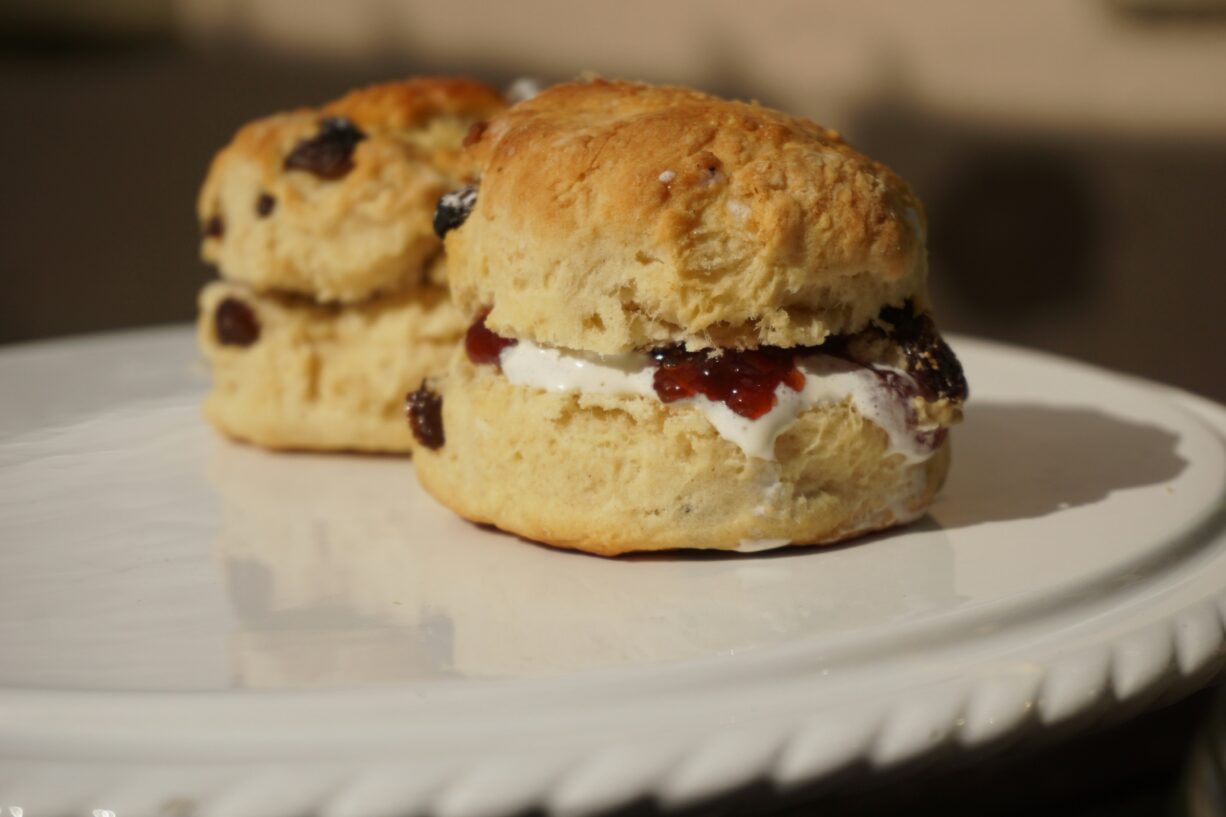
The next morning, my father dropped me off at the train station so I could catch the 11:20 bullet back to San Francisco. I bought a cup of coffee from the nearby cafe and took a seat in the middle of the sixth car, my usual routine. I pulled out my phone and checked my email first, then my Google Calendar, then Instagram. It took me a moment to register that Sidney had appeared once again, but she was now sitting before a tiered porcelain stand of beautifully iced desserts and plump yellow scones. A server in a pink jumpsuit and chambray apron struck a peace sign behind her.
The location tag was Sketch tea parlor, London, 9 Conduit Street. Dream come true, the caption read. Earl Grey on a gorgeous afternoon in London. #cityofsidney #sidneyinlondon #getawaychallenge #hightea #travel #Eurotrip2016 #lifestyle #newfriends #unsponsored.
For a second I could feel the taste of scones in my mouth, though I hadn’t eaten anything that morning. Then I remembered I was wearing a vanilla-scented lipstick. My thumb hovered over the heart button underneath the post, before I continued to scroll.
*
In San Francisco, I made my way off the train and dumped my empty cup into one of the overflowing garbage cans. The activity around the station was what you’d expect on a weekend: bundles of teenagers from the suburbs planning their shopping routes in the city, Ubers and Lyfts waiting to pick up their fares, middle-aged men wrapped in dirty coats, slumped over a shopping cart of their belongings. Women with their hair tied neatly in buns stood next to portable wire racks of pamphlets and abridged bibles, ready to divulge the singular road to saving your life. I always avoided them because they didn’t seem to want to avoid me. It was as if they’d known, somehow, that in the past I had steadfastly believed in what they still preached.
“Excuse me,” one of them called out. She was wearing a blue wool dress that reached the top of her pointed-toe boots. I smiled without looking at her face and began to walk at a slight diagonal. This one knew, too.
“Excuse me,” the woman said again, so I stopped. “That’s a very nice coat,” she said, pointing to my front. “I just wanted to let you know.”
I thanked her and paused for a pamphlet, but she didn’t hand me one.
Why hadn’t she handed me one? I kept walking, towards the bus station. Why not today? I wondered how many people a day, or in a month, the woman was able to persuade. Did she continue to reach out to others even after she’d rolled the wire rack of pamphlets back to her car, or onto the train to return home?
I rode the Muni until I’d reached Broderick and Bay, then walked the rest of the way to the Palace of Fine Arts. As usual, the deep green lagoon that surrounded the Palace was dotted with swans. Couples and knots of tourists swirled about the lawn, taking pictures of the palace, of the birds on the water with their soft, curved necks, of one another lounging on picnic blankets and enjoying their chicken salads in paper boxes from the sandwich shop nearby. I found an empty patch of grass and pulled off my coat, the faux shearling one with stripes, and sat on it. The coat had cost over two hundred dollars on sale, but I found myself not caring whether the fabric was now stained.
I turned toward the Palace. Sidney and I had long believed the Palace of the Fine Arts to be the city’s most beautiful attraction, with its golden rotunda and grand colonnades rising from the earth as if they had always belonged in San Francisco. A slice of ancient Rome in California. A colossal jewel that you couldn’t quite describe. Even with the knowledge that the Palace had been erected to be temporary, that it had to be reconstructed with completely new materials to be able to stand, I still found the structure a wondrous sight to behold.
A strong breeze ruffled by, causing hands to fly up and catch their hats. My hat tumbled toward the lagoon. I didn’t like the person I’d become.
Grace Chao’s stories have appeared in The Sewanee Review, The Sun, Story, Sine Theta, and elsewhere. She was the 2023-2024 Rona Jaffe Foundation Fellow at the Fine Arts Work Center in Provincetown, and received her MFA from the University of Oregon.