


An Interview with M Lin
April 26, 2026 | blog, Interviews
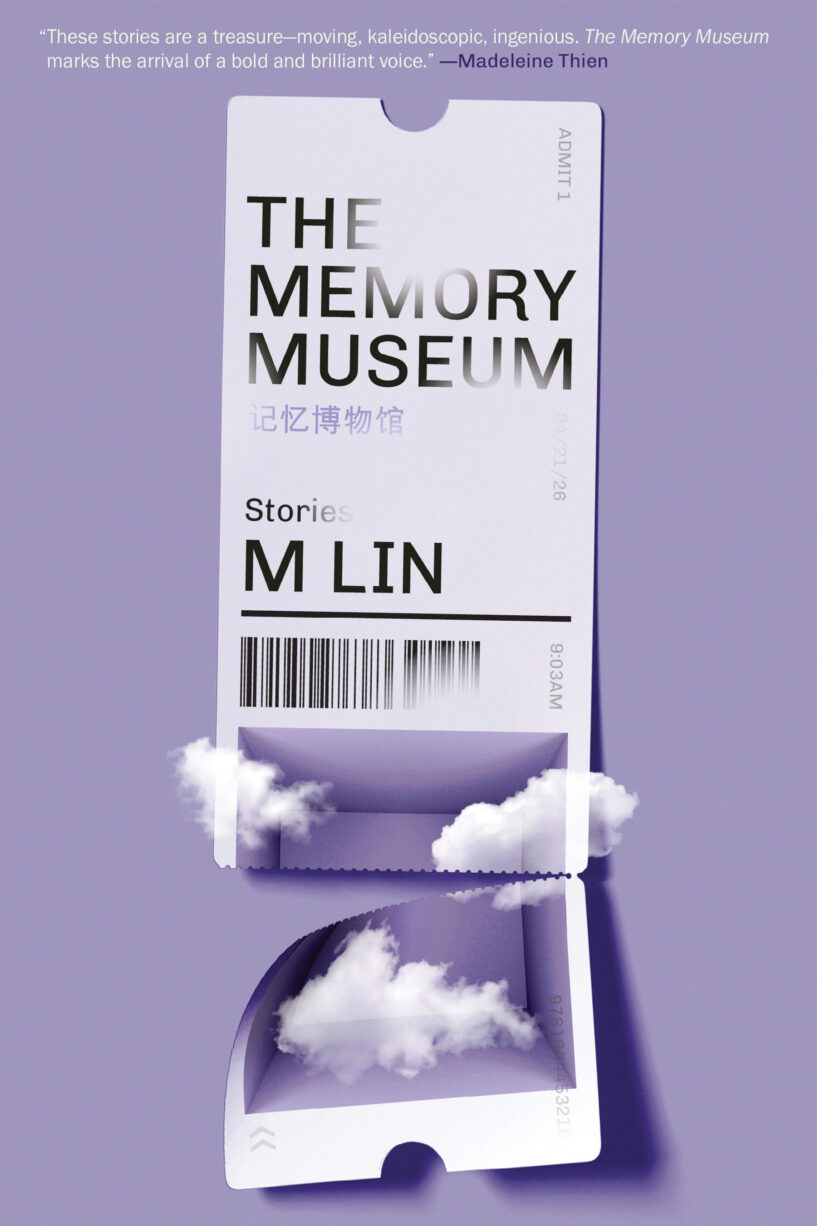
M Lin’s first book, The Memory Museum is a collection of short stories that explores family, place, the future, and makes meaning from the fractures of a post-Covid world. Through a blend of Mandarin and English, the stories lie at the intersection of Chinese and American identity. Being absolutely enamored by these stories, it was my (Allie McCoy MFA ‘27) pleasure to speak with M about the collection and how it came to be
—————————————————————————————————————-
Let’s start at the beginning. Did you start with individual stories, or did you set out wanting to write a collection?
In 2021, I started my MFA at Brooklyn College. Before that, I’d only ever written four short stories: two of which I used as my writing sample to apply for MFAs, and the other two during the summer before I started the program for a workshop I took so I could understand what a “workshop” was. When I got to graduate school, I had nothing that I was still interested in to submit to workshop and had no choice but to draft a new story for every deadline. All the stories in The Memory Museum were first written in those two years. At the beginning, because I only just started writing fiction, it was so beyond me to comprehend the idea of having a book that the idea of a story collection did not occur to me at all. I was constantly producing new things, approximately a story per month to meet the workshop schedule, that I simply wrote whatever came to me. Perhaps because I wrote these stories in a relatively short period without much forethought, questions and concerns and people that preoccupied me during that time naturally materialized in all of them. It wasn’t until the beginning of the last semester that I tried to actually envision how the stories I already had could coalesce into a collection, and what was still missing to complete the idea of said collection. I don’t remember a single moment of epiphany or the exact timeline, but I think maybe I wrote two more stories after that idea of a collection began to take shape.
For Individual stories, what does that process look like? Do you plan plot and themes in advance or just write and see where it goes?
I studied film in college and tried to become a professional screenwriter for six years afterward. In screenwriting, we are taught to plan the plot first, to work from a synopsis to an outline (or treatment) that can vary in degree of details: it could be a page of prose, or ten pages, or scene by scene for many pages. That was how I always wrote screenplays––the story “Tough Egg” in the collection alludes to this process. For fiction, intuitively, I realized right away that the process was going to be the complete opposite: that I can only discover who the characters are and what is going to happen in the story by writing through it. Cristina Rivera Garza, who I admire, once said in her conversation with David Naimon on his podcast Between the Covers that she thinks of writing as a process of unknowing. That feels true to my process, too. The more I write into a story, the more I find out there’s more I don’t know about the world within it. Even in the last round of editing, prompted by questions from my editors, I ventured into previously unknown territories in some stories that ended up being quite important to their completion.
What inspired the collection as a whole? How did you see the overarching themes connecting the stories?
As I mentioned earlier, the stories started to share themes and even types of characters naturally on their own. What inspired this collection was what inspired me to write fictional together––in 2020, when China became the center of the world’s attention, more so than ever since I moved to the States, and anti-China sentiment and anti-Asian hate felt more prominent and prevalent, I realized that even though I had lived here for a decade, people here didn’t understand me or where I came from. At the same time, things within China were changing quickly, too, and being physically far away but emotionally involved was complicated, confusing, even uncomfortable. I started to notice changes to my relationship with my family, my friends, my home country, and my own identity, which probably had all been happening for years. In short, I had a lot of questions and frustrations, which became inspirations for these stories. The Memory Museum was an attempt to see and be seen, to understand and be understood.
I find all of these stories to be very character driven, yet they are deeply concerned with place. What’s the relationship between character and setting for you?
I don’t think I’ve thought about this part of my process before––thank you for asking! I had to look at the stories and really think about how the places in them first came to me. And the truth is I can’t remember! Which is to say, I think, that they are part and parcel of the characters. When the characters arrive in my mind,they don’t appear in a vacuum, but already in the place they are supposed to be, narratively speaking. As an emigrant/immigrant, I do think about place a lot in life: how it shapes me, how it affects me day-to-day, including how I interact with other people. Also, when we talk about place, what are really referring to? It’s not just the terrain, the architecture, the physical attributes, but what make a place difficult to replicate are the intangible, sometimes even indescribable traits, and the convoluted, precise way that they come together, plus the element of time: the era, the season, the time of the day, etc.. It’s incredibly rich so the writer has to decide what are the important details to include in each moment in a narrative.
A lot of your stories feature child characters, is your process for writing children different than writing adults?
I wouldn’t say they are different. I believe that we can all summon the children in us if we tried sincerely because we have all been children. In my 20s, for almost two years I worked as a part-time babysitter for an elementary-school-aged girl, picking her up every day and spending time together until needed. I also met a lot of other children through her so I definitely drew on my observations from that period. I also think in fiction, or maybe in all art forms, there’s a certain degree of artistic license writers can take when portraying kids, a delicate blend of what’s believable and what’s interesting, for a lack of better adjective. Believability, when it comes to children, is often questioned, but I think believability in fiction in general requires a much longer conversation.
As someone who is not bilingual, I’m interested in how you incorporate Mandarin within your work. I know you do translation work as well. Can you talk a bit about your process of writing between languages?
I liked the phrase you used, “writing between languages.” I think that is exactly the state I am in, more or less permanently at this point, both in life and in writing. I didn’t have to incorporate Mandarin per se; when I run into an idea or a phrase that English doesn’t suffice, or that it’s something that’s rich with cultural or historical context, it feels necessary to express it in its original language, Mandarin, if only at first. Most of this work is unintentional in the first draft. I think I am more intentional with dialogue (which is the only direct access the reader gets to the characters), because I want to remind the reader, at times, that these characters are actually speaking Mandarin to each other, even though their lines are written in English. This might mean some literal translations of Mandarin expressions and syntax that are not idiomatic in English, which might interrupt the flow or reading, tripping up readers for a second or two, but I’m okay with that. There’s so much room to stretch the language! And the question is who is and is not allowed to do that, which gets into power dynamics based on race, gender, class, nationality, etc.. I do think that in my heart, I am prioritizing readers like myself, who understand both languages, and hope they will first and foremost find this “writing between languages” interesting, perhaps even satisfying.
Your story “Tough Egg” includes both prose and screenwriting. Why did you decide to incorporate both mediums into this story?
It was a risky choice to include the screenplay pages and at different points I thought about cutting them but eventually decided it was an integral part of the story. “Tough Egg” is very much about, among other things, the relationship between the artist and the work: what does the act of creating mean for the life of the artist outside artmaking (or perhaps “life outside artmaking” is nonexistent, since when you’re in the middle of creating something, often everything in life feels as if it has something to with that thing) and how parts of the artist’s self make it into the work, consciously or subconsciously. In the story, the screenplay is not based on the narrator’s personal life, but in her process of writing it, it becomes personally very meaningful, which would not be clear without actually showing the screenplay. The story of the screenplay becomes a mirror that reflects and refracts her life and her psyche. The downside, or risk, rather, is that the narrator is supposed to be a “good” screenwriter, impressive enough to get this call from a movie star, and by including the screenplay pages, I yield the rights to judge her talent to the reader, instead of asking them to take my word for it. Usually when a genius work of art is included in a book, the reader doesn’t actually get to see it for themselves, such as in Elena Ferrante’s Neapolitan Quartet, we as readers never get to read Lila’s The Blue Fairy word for word, but only through Lenu’s description that tells us that it’s the most brilliant piece of writing. If Ferrante were to give us the text of The Blue Fairy, it would probably be a disappointment. As brilliant as she is, I don’t think she could ever write anything to match Lenu’s description. I decided to break that convention and take the risk––after, in “Tough Egg,” exactly how good a screenwriter the narrator is is not what I’m trying to prove to the reader.
I’m curious what your revision process looked like for this collection. Were there any stories that you wanted to include that ended up not fitting, or did you have to shape stories to fit within the collection?
Yes, there was one story that went through many drafts, entirely different ways of telling, and ultimately my editors didn’t think that it was up to par with the rest of the collection, which I agreed with. I had a hard time with that story––it was the only story that I’ve ever written that started with an idea that was perhaps more suitable for an essay, and I tried different narratives to contain the many facets of that idea; it was like a costume fitting process and nothing ended up fitting perfectly. For me, this temporary failure doesn’t exclude the possibility of idea-driven, essayistic fiction in the future, as well as fiction that aims to do other things than telling a story with beginning, middle, and end, that engages reader with non-narrative threads and tension. I’ll keep trying and experimenting!
I didn’t have to change anything in each story for the purpose of it fitting with the rest. But as I revised story by story, especially later in the editing process with my editors, I tried to more clearly delineate the shared themes and details between storieswhen I saw the opportunity.
Were any of these stories particularly difficult to write? Did any of them drastically change while you were revising?
If these stories were trees, they were all born with healthy skeletons, and revision felt more like rearranging some branches, trimming and shaping the leaves, no major surgery, though I’ve learned that sometimes a small change can have seismic effect, which makes fiction feel like an exact science. For me, with short stories, drastic revision usually means to start over and write an entirely new story. Three stories in the collection were my second try at those ideas, and if you had read their previous iterations, you might have not recognized them at all.
The story that I had the most difficulty writing was “野火烧不尽 / no prairie fire can destroy all the weeds,” but the challenge was not technical but emotional. I wrote that story very close in time to the events it described. My feelings were raw and unprocessed, which made living through those events on the page extremely uncomfortable. Nearing the end, I was surprised by where the story decided to go, by the ending’s darkness and despair. Frankly I felt depressed after finishing the story, whichactually led me wanting to write something that is farther away from reality, with more hope and joy, and that turned out to be the titular story, “The Memory Museum.”
The titular story “The Memory Museum” imagines a futurewhere a new and better government has come to power and we have the technology to revisit and reconstruct memories. How did you know that this was the right title piece for the collection?
Chronologically, “The Memory Museum” was the last story I wrote for the collection (technically “Yulan” was, but I’m not counting it because it’s one of those stories that’s a rewrite of a previous idea). I think emotionally, the writing of all the prior stories had led me to “The Memory Museum”: the vision for autopian future (politically, personally, interpersonally as a society), the understanding of joy as resistance––it’s what the characters in other stories would have wanted to see, or were striving to achieve or understand. Many of them already understand this but not from this future vantage point. So I wanted this story to be the emotional fulcrum/destination of the whole collection, to cast all the stories that came before in a new light.
The collection is also a memory museum in itself. Every story is a memory of its characters, and all the stories collectively are the memory of a generation, or a certain group within the generation who share ideas and hopes and lived experiences.
And as obsessed with memory as I am, it makes me happy to have the word in the title of my first book!
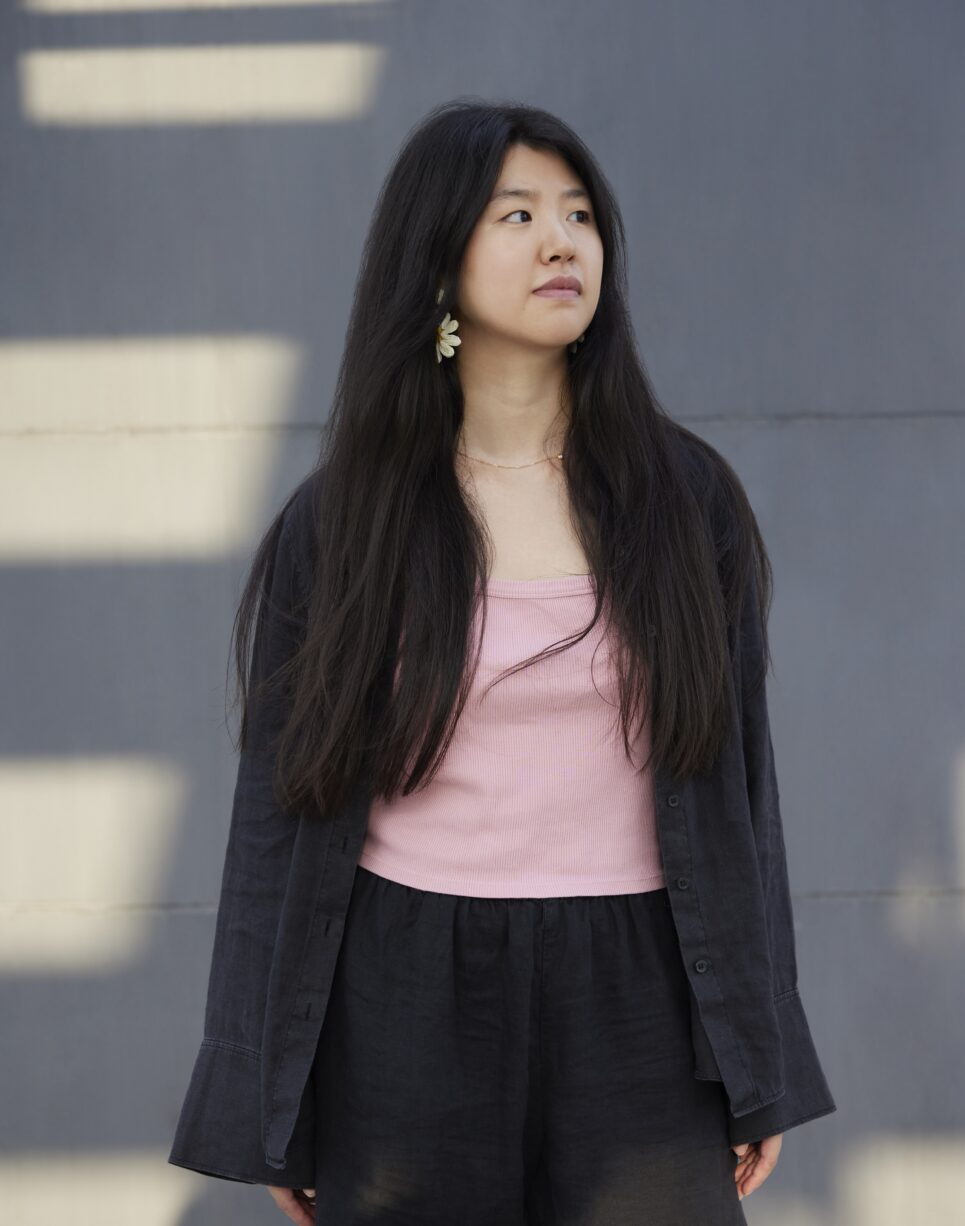
M Lin is a Chinese writer and translator living in the US. Born and raised in Beijing, she writes in English as her second language. Her debut story collection, The Memory Museum, is published by Graywolf Press in April 2026, including stories that appeared in Ploughshares, Electric Literature, swamp pink, Joyland, Epiphany, Fence, and Best Debut Short Stories 2023. Her nonfiction and translations can be read in The New York Times, Guernica, Words Without Borders, The Margins, and elsewhere.