



The Escape to Happiness: A Review of Helen of Nowhere
January 20, 2026 | blog, book reviews, news
Review by Leslie Cox, MFA ‘27
Helen of Nowhere
141 pp. Coffee House Press. $18.00
Makenna Goodman’s second novel, Helen of Nowhere, presents itself as a story about a disgraced professor, the Man, who leaves behind a forgotten career and a failing marriage where the dog has taken his place upon the bed. Thus, the Man is driven toward the confines of nature to rekindle his happiness and start anew. While this yearning for happiness can resonate with most readers, Goodman reminds us that the solutions for a happy life do not come from an escape. Instead, it is within the façade of failures in our lives where true happiness can be found.
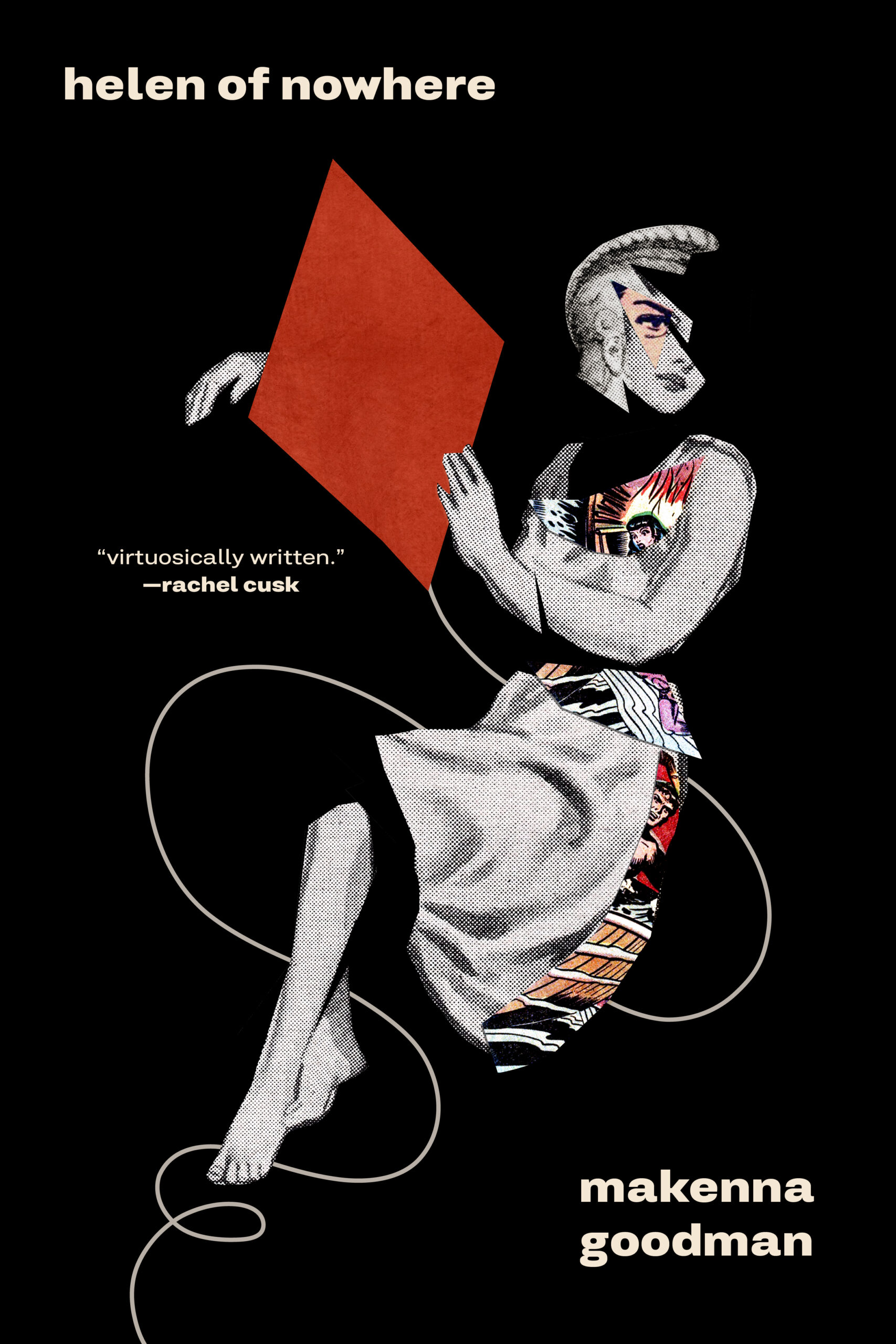
Helen of Nowhere must be praised for its vocal and unique writing style. The novel holds playwriting elements that carry this small group of characters through limited, yet unforgettable scenes. In fact, the novel has only four characters: Man, Realtor, Helen, and Wife. Similar to a play, all these characters are listed and given physical descriptions before the first chapter ever begins. This style carries well into the settings of this novel. The Man is touring a house in the countryside owned by a woman named Helen, and we stay grounded in this setting for most of the story. Aside from the Wife, all characters interact inside Helen’s house as if it were a stage, pondering in the discussions of nature and isolation.
Goodman writes from the point-of-view of the Man for most of this novel apart from a variety of surrealist perspectives. In the second chapter, Goodman switches to the Realtor’s point-of-view. She gives a tour of Helen’s house to the Man, but what makes this switch so interesting is that the Man responds to the Realtor’s narration with his own narrative voice, distinguishing himself with the use of italics. This technique makes for a compelling interaction between these two characters and provides depth to their conversation, allowing the reader to see them responding to a chapter like a journal entry. Moreover, this chapter uses their conversation to divulge the stronger themes of our deteriorating nature caused from a toxin-formulating country, “More importantly, what happened to the soil, professor? Rains came, and the soil was washed away into the rivers. The water became toxic” (41).
Eventually, with enough questioning about her life, Helen appears in a way that continues to speak to Goodman’s creative style. More specifically, Goodman uses mystical elements to present Helen as an oracle for happiness. Initially, she speaks through the Realtor, allowing the Man to ask her questions such as, “I thought I would remain relevant, but will I?” (76) and, “My wife. Why am I not attracted to her?” (77). Further reading shows Helen performing a séance on the Man, revealing the source of his unhappiness, how he’s been missing it, and what he needs to do to save it. Ultimately, the Man gains clarity. He returns home to the city and rests his head on his sleeping wife, taking the dogs’ place, reclaiming his role in their marriage.
The Wife is the name of the penultimate chapter in this book, but her character hints at something far greater than just a problem for the Man. Initially his most stunning student at the college, she eventually becomes a colleague, proving herself to be more capable than him in his own research. However, what makes the Wife so important is the silence she bestows at the expense of her husband’s goals. She sacrifices her own research and, as the Man realizes, “It was the case that for too long, I—the kite—had become tangled in a high tree, and she—the anchor—had been pulled constantly with no predictable pattern… she was done being the anchor entirely” (91). The Wife seemingly displays the troubling factors of women in the workplace and how men often prosper from their work done behind the scenes. Goodman’s metaphor of the kite and anchor are more than fitting as she concludes, “A kite can never become an anchor, only anchors could become kites” (91).
Makenna Goodman’s Helen of Nowhere is a philosophical and mystical adventure of brilliance that has so much more to offer, but further, it begs the reader to ask themselves the question: What must I do to achieve true happiness? Goodman reminds us that the answer will never be simple, not without profound introspection, at least, but that should not keep us from its enlightening pursuit.
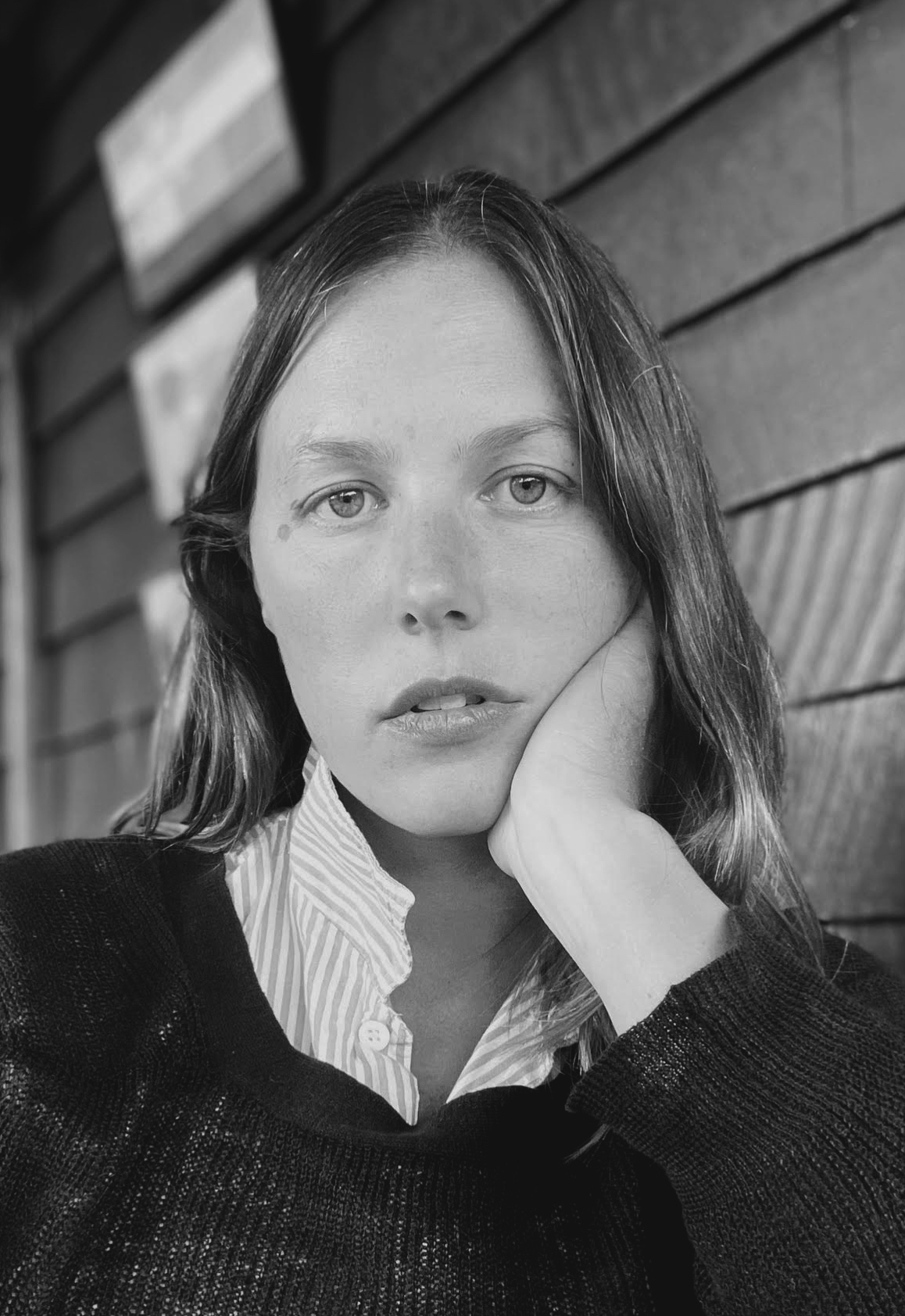
Makenna Goodman is the author of two novels, Helen of Nowhere (Coffee House Press, 2025) and The Shame (Milkweed Editions, 2020), and has written for international publications including the New York Times, New York Review of Books, the Los Angeles Review of Books, Harvard Review, The White Review, BOMB, The Common, ASTRA Magazine, Mousse Magazine, and others. Also an editor, she is based in Vermont.
Photo credit: Sam Kelman